
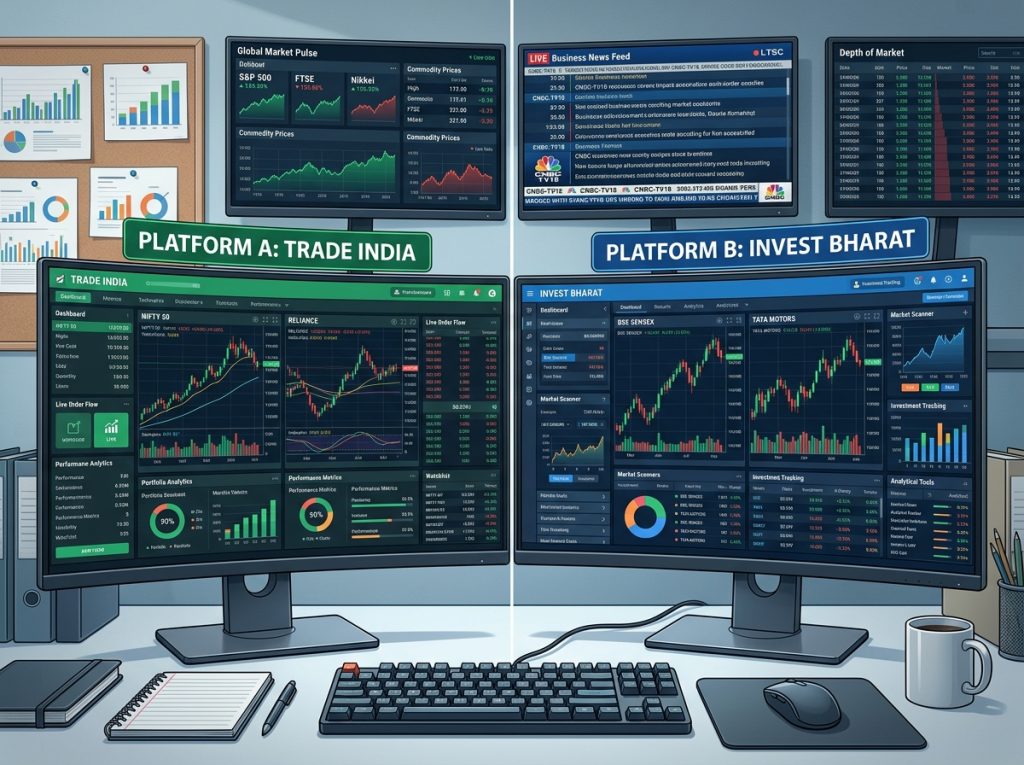
Choosing the right stock broker can significantly impact your investing and trading experience. Whether you’re opening your first Demat account, actively trading derivatives, or building a long-term investment portfolio, selecting the right platform is one of the most important financial decisions you’ll make.
Among India’s discount brokerage leaders, Zerodha and Upstox consistently rank among the most popular choices. Both platforms offer competitive brokerage charges, advanced trading tools, and digital account opening processes that have helped millions of Indians enter the stock market.
However, while they may appear similar at first glance, there are meaningful differences in platform stability, investment tools, user experience, customer support, educational resources, and overall ecosystem value. These differences can influence which broker is better suited for your specific goals.
In this comprehensive Zerodha vs Upstox comparison, the experts at Retro Living Today analyze every major factor investors should consider before opening an account. We’ll compare pricing, trading platforms, features, investment options, technology, security, customer experience, and much more.
By the end of this guide, you’ll have a clear understanding of which broker offers the best value for beginners, active traders, long-term investors, and advanced market participants in 2026.
Zerodha vs Upstox: Quick Overview
Before diving into the detailed comparison, let’s understand what makes these two brokers so popular.
What Is Zerodha?
Founded in 2010, Zerodha revolutionized India’s brokerage industry by introducing discount brokerage at scale. Today, it is one of India’s largest retail stock brokers and serves millions of investors and traders.
Zerodha is particularly known for:
- Kite trading platform
- Coin mutual fund platform
- Varsity educational ecosystem
- Transparent pricing structure
- Strong technology infrastructure
- Investor-focused approach
The company has built a reputation for innovation and simplicity, making it a favorite among both beginners and experienced traders.
What Is Upstox?
Upstox is another major discount broker that has experienced significant growth over the past several years. The platform offers stock trading, derivatives trading, mutual fund investing, IPO participation, and advanced charting tools.
Upstox is recognized for:
- Modern mobile experience
- Competitive pricing
- Fast account opening
- Trading-focused tools
- Growing ecosystem
- Active trader features
The company has invested heavily in technology and user experience to compete directly with Zerodha and other leading brokers.
Quick Comparison Table
| Feature | Zerodha | Upstox |
|---|---|---|
| Founded | 2010 | 2009 |
| Demat Account | Yes | Yes |
| Equity Delivery | Free | Free |
| Intraday Charges | ₹20 per order | ₹20 per order |
| Mobile App | Kite | Upstox App |
| Mutual Funds | Coin | Upstox Mutual Funds |
| IPO Investing | Yes | Yes |
| Educational Resources | Extensive | Moderate |
| API Access | Available | Available |
| Best Known For | Reliability & Ecosystem | User-Friendly Trading |
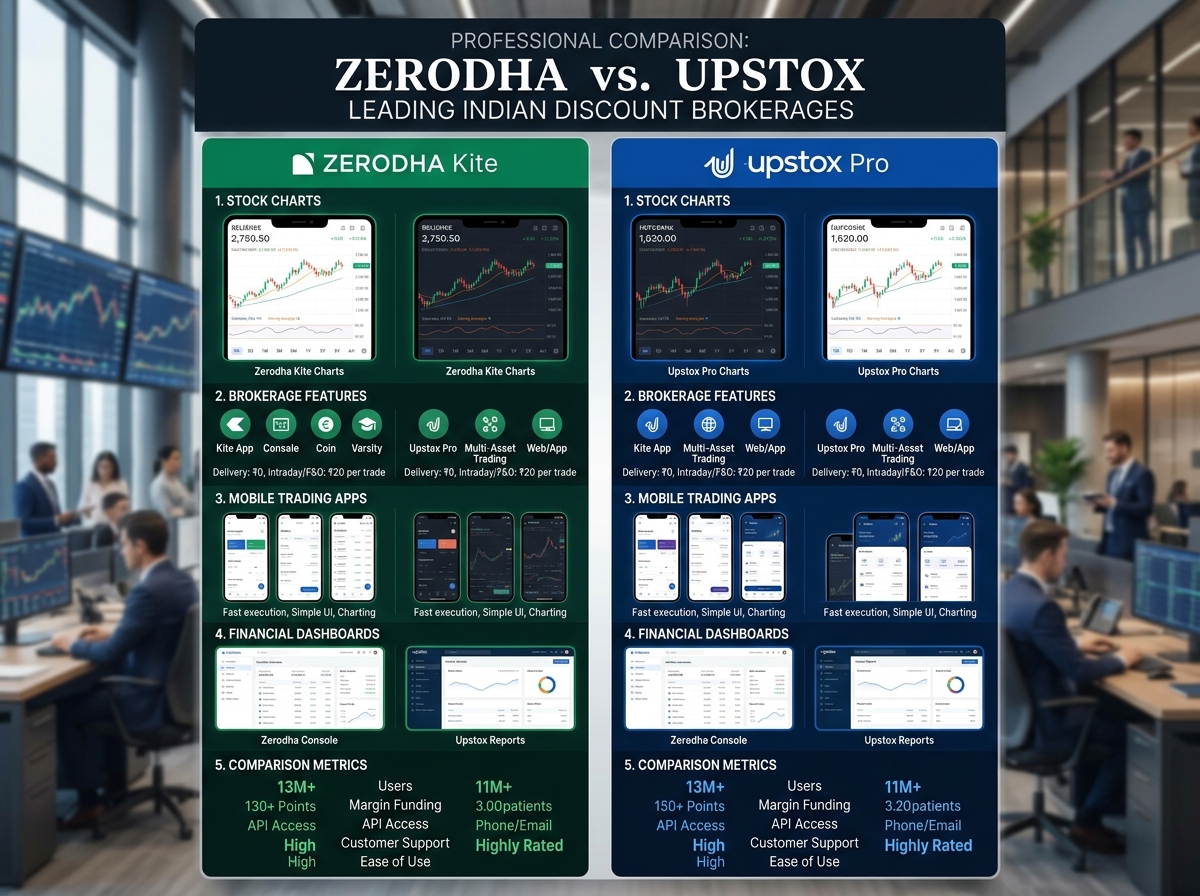
Zerodha vs Upstox Brokerage Charges Comparison
For many investors, brokerage costs are one of the biggest deciding factors when selecting a broker.
Fortunately, both platforms follow the discount brokerage model, making them considerably cheaper than traditional full-service brokers.
Account Opening Charges
Historically, both brokers have adjusted account opening fees periodically based on promotions and regulatory changes.
Before opening an account, investors should verify current pricing directly from the broker’s official website because charges may change.
Generally speaking:
- Zerodha charges a one-time account opening fee.
- Upstox may offer promotional pricing from time to time.
- KYC and verification processes are fully digital.
For most investors, account opening costs are relatively insignificant compared to long-term brokerage expenses.
Equity Delivery Charges
Both brokers provide:
- ₹0 brokerage on equity delivery trades
This means investors purchasing shares for long-term holding do not pay brokerage commissions on delivery transactions.
This feature is particularly valuable for:
- Long-term investors
- Retirement planners
- SIP investors
- Portfolio builders
Intraday Trading Charges
For intraday traders:
Zerodha
- Flat ₹20 per executed order or 0.03%, whichever is lower
Upstox
- Flat ₹20 per executed order or applicable percentage cap
For most retail traders, the pricing difference is minimal.
Futures Trading Charges
Both brokers typically charge:
- Flat brokerage per executed order
This pricing structure is attractive for active derivatives traders because transaction costs remain predictable.
Options Trading Charges
Options traders frequently compare:
- Zerodha vs Upstox options trading charges
- Zerodha vs Upstox brokerage comparison
- Best broker for options trading
In practice, both brokers offer highly competitive pricing.
However, traders should also evaluate:
- Order execution quality
- Platform stability
- Risk management tools
- Option chain functionality
Brokerage costs alone should not determine the final decision.
Hidden Charges: Are There Any?
One of the most common investor concerns is hidden fees.
Both brokers maintain transparent pricing structures.
However, investors should remember that the following costs apply regardless of broker:
- Exchange transaction charges
- GST
- STT
- Stamp duty
- SEBI charges
- Depository participant charges
Many new investors incorrectly assume these are broker fees when they are actually regulatory and exchange-related charges.
Verdict on Charges
If you’re comparing Zerodha vs Upstox brokerage charges, the reality is that both brokers are extremely competitive.
The difference in actual trading costs for most investors is negligible.
Therefore, platform quality, features, support, and reliability often become more important deciding factors.
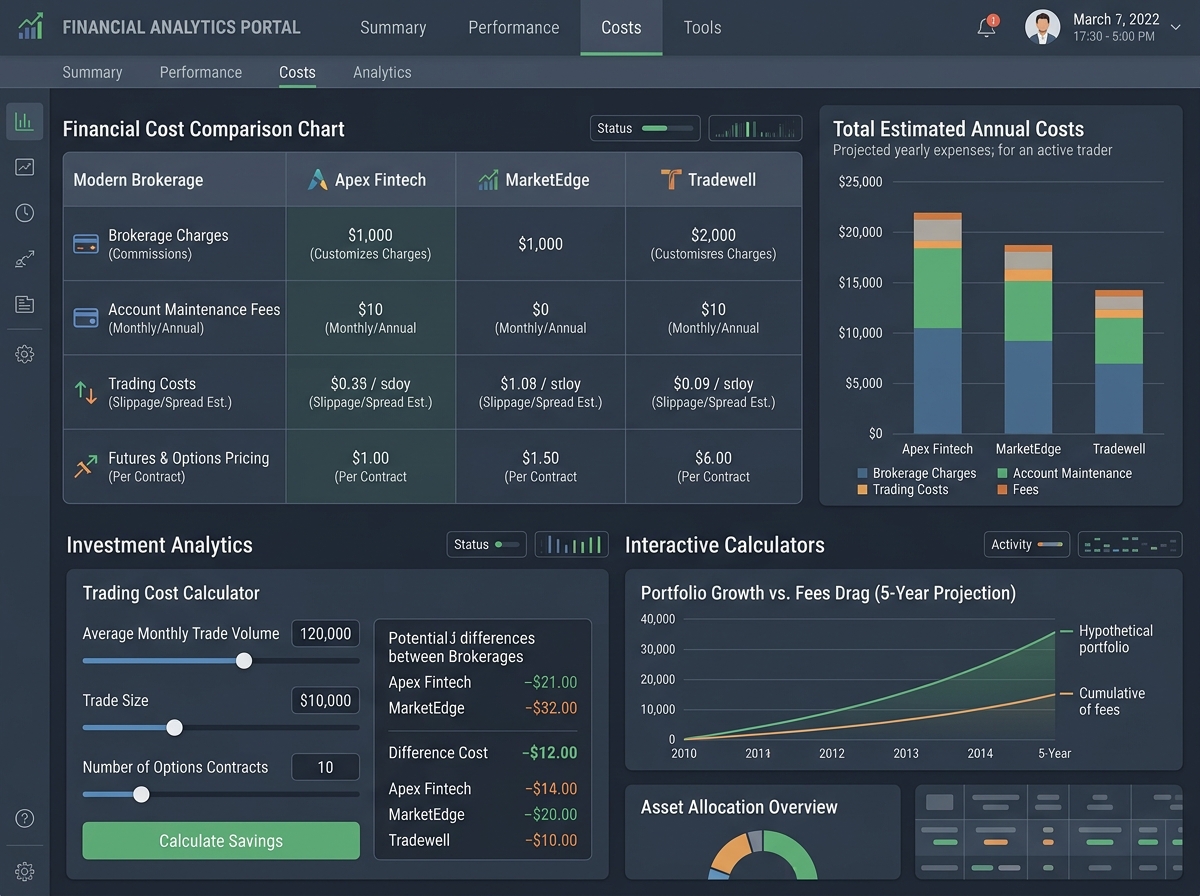
Zerodha Kite vs Upstox Trading Platform
Brokerage charges matter, but your daily trading experience depends heavily on the platform you use.
This is where the Zerodha Kite vs Upstox comparison becomes particularly important.
Zerodha Kite Overview
Kite is widely regarded as one of India’s most influential trading platforms.
Key features include:
- Fast order execution
- Clean interface
- Advanced charting
- Watchlists
- Multi-device synchronization
- Extensive market data
- Options trading tools
Many experienced traders appreciate Kite’s minimalistic design because it avoids clutter while maintaining powerful functionality.
Advantages of Kite
Simplicity
Kite is designed to remain fast and responsive even during volatile market sessions.
Stability
Many traders consider Zerodha’s infrastructure among the most reliable in the discount brokerage industry.
Ecosystem Integration
Kite integrates seamlessly with:
- Coin
- Console
- Varsity
- Smallcase integrations
- Third-party tools
Learning Resources
Beginners often benefit from the educational content available within the broader Zerodha ecosystem.
Upstox Trading Platform Overview
Upstox has significantly improved its platform experience over recent years.
The platform offers:
- Advanced charting
- Mobile-first design
- Quick order placement
- Multiple watchlists
- Derivatives tools
- Market insights
- Portfolio tracking
Its interface is designed to appeal to both beginners and active traders.
Advantages of Upstox Platform
Modern Design
Many users appreciate the contemporary interface and streamlined navigation.
Mobile Experience
The mobile app is often praised for usability and accessibility.
Trading Features
Upstox continues adding advanced tools for:
- Options traders
- Intraday traders
- Technical analysts
Ease of Onboarding
New investors can often start using the platform quickly with minimal learning curve.
Which Trading Platform Is Better?
The answer depends on your preferences.
Choose Zerodha if you value:
- Proven reliability
- Mature ecosystem
- Educational resources
- Long-term investing tools
- Stability during market volatility
Choose Upstox if you value:
- Modern interface
- Mobile trading experience
- Active trader features
- Fast onboarding
For most long-term investors and diversified users, Zerodha’s ecosystem provides a slight advantage.
For mobile-centric traders, Upstox may feel more intuitive.

Zerodha vs Upstox Features Comparison
While both brokers offer access to the major investment products available in India, the overall user experience often comes down to the additional tools and services that support investing, trading, portfolio management, and financial education.
The best broker is not always the one with the lowest fees. In many cases, the platform that helps investors make better decisions over the long term delivers far greater value than a small difference in brokerage charges.
Mutual Fund Investing
Mutual funds have become one of the most popular investment vehicles among Indian investors, particularly those focused on long-term wealth creation.
Zerodha Coin
Zerodha offers its dedicated mutual fund platform called Coin.
Key features include:
- Direct mutual fund investments
- SIP setup and management
- Goal-based investing
- Fund performance tracking
- Integration with Zerodha accounts
- Long-term portfolio management
One major advantage is that investors can manage stocks, ETFs, and mutual funds from the broader Zerodha ecosystem.
Upstox Mutual Funds
Upstox also provides access to direct mutual fund investments.
Key benefits include:
- Direct plans
- SIP investments
- Portfolio tracking
- Mobile-friendly experience
- Simplified fund selection
For casual investors, both platforms perform well.
However, many long-term investors prefer Zerodha’s overall investment ecosystem due to the seamless integration between Coin, Kite, and Console.
IPO Investing
Initial Public Offerings continue attracting significant interest from retail investors.
Both brokers allow investors to:
- Apply for IPOs online
- Track application status
- Monitor allotment updates
- Participate through UPI
The IPO application process is relatively straightforward on both platforms.
Neither broker has a significant advantage when it comes to IPO participation, making this category largely a tie.
ETFs and Long-Term Investing
Exchange-Traded Funds (ETFs) are increasingly popular among investors seeking diversification at lower costs.
Both Zerodha and Upstox support:
- ETF investing
- Index investing
- Long-term wealth-building strategies
- Portfolio diversification
Long-term investors should focus more on platform stability, account management, and reporting tools rather than minor fee differences.
Zerodha vs Upstox API Comparison
For algorithmic traders, developers, and advanced market participants, API access can be a critical consideration.
Zerodha API
Zerodha’s Kite Connect API is one of the most recognized trading APIs in India.
Key capabilities include:
- Automated trading systems
- Real-time market data
- Portfolio management integration
- Custom trading applications
- Strategy automation
- Third-party ecosystem compatibility
Many fintech startups and algorithmic traders have built applications around Zerodha’s API infrastructure.
Upstox API
Upstox also offers API access for developers.
Features include:
- Real-time trading access
- Market data feeds
- Order management
- Automated trading support
- Application development tools
The platform continues to improve its API offerings and developer documentation.
Which API Is Better?
For serious developers and algorithmic traders, Zerodha currently enjoys stronger adoption and a larger ecosystem.
Advantages include:
- Larger developer community
- Extensive third-party integrations
- More educational resources
- Better-established infrastructure
For casual users, however, API capabilities may not significantly impact broker selection.
Zerodha vs Upstox Customer Support
Customer support becomes especially important during:
- Account issues
- Technical glitches
- Fund transfers
- Margin concerns
- Trading errors
- Verification problems
Many investors underestimate support quality until they need urgent assistance.
Zerodha Customer Support
Zerodha provides:
- Ticket support
- Help center documentation
- Educational resources
- Community discussions
- Email support
The company places significant emphasis on self-service support through detailed documentation and knowledge bases.
This approach works well for experienced users but may feel less personal to complete beginners.
Upstox Customer Support
Upstox offers:
- Customer service channels
- Help center resources
- Account assistance
- Technical support
The company has invested in improving customer service as its user base has expanded.
Which Broker Has Better Customer Support?
Customer support experiences vary significantly between users.
However:
- Zerodha generally excels in documentation and self-help resources.
- Upstox focuses on accessibility and simplified support processes.
Investors who prefer solving problems independently often appreciate Zerodha’s extensive knowledge base.
Those seeking guided assistance may find Upstox more approachable.

Security, Trust, and Reliability
Security should be a top priority when choosing any financial platform.
Investors entrust brokers with:
- Personal information
- Banking details
- Investment portfolios
- Trading capital
- Sensitive financial records
Zerodha Security
Zerodha employs:
- Two-factor authentication
- Secure login systems
- Regulatory compliance measures
- Encryption technologies
- Risk management controls
The broker has built a strong reputation for transparency and investor protection.
Upstox Security
Upstox also implements:
- Two-factor authentication
- Secure account access
- Data protection protocols
- Regulatory safeguards
- Investor security measures
Regulatory Oversight
Both brokers operate under the regulatory framework governing Indian securities markets.
Investors should always verify current registrations and compliance information directly through regulatory sources before opening any brokerage account.
Platform Reliability
One of the most debated topics among traders is platform reliability during periods of extreme market volatility.
Factors that influence reliability include:
- Server infrastructure
- Order execution quality
- System uptime
- Traffic management
- Technology investments
Historically, both platforms have experienced occasional technical issues, as is common across the brokerage industry.
However, Zerodha generally maintains a stronger reputation among professional traders regarding ecosystem maturity and operational stability.
Zerodha Pros and Cons
Overview
Zerodha remains the market leader for many reasons.
The company has built a comprehensive investing ecosystem that extends far beyond simple stock trading.
Key Features
- Kite trading platform
- Coin mutual fund platform
- Varsity education portal
- Advanced charting
- API ecosystem
- Extensive third-party integrations
Best Use Cases
Zerodha works particularly well for:
- Long-term investors
- Serious traders
- ETF investors
- Mutual fund investors
- Algorithmic traders
- Financial learners
Advantages
Mature Ecosystem
Few brokers in India offer such a comprehensive suite of investment tools.
Exceptional Educational Resources
Varsity remains one of the best free investing education platforms available.
Strong Brand Trust
Millions of investors trust the platform.
Third-Party Integration Support
Many investing and analytics tools support Zerodha integration.
Limitations
Learning Curve
Some beginners may initially find the ecosystem overwhelming.
Support Model
Users seeking highly personalized assistance may prefer more direct support channels.
Who It Is Best For
- Long-term investors
- Active traders
- Experienced market participants
- Investors seeking educational resources
Verdict
Zerodha remains one of the strongest all-around brokerage platforms in India and continues to set industry standards in many categories.
Upstox Pros and Cons
Overview
Upstox has evolved into one of India’s leading discount brokers by focusing on technology, usability, and accessibility.
Key Features
- Modern trading interface
- Mobile-first design
- Competitive pricing
- IPO access
- Mutual fund investing
- Advanced charting
Best Use Cases
Upstox is particularly attractive for:
- New investors
- Mobile traders
- Active traders
- Cost-conscious users
- Investors seeking simplicity
Advantages
User-Friendly Interface
The platform is designed with accessibility in mind.
Strong Mobile Experience
The mobile application is one of Upstox’s strongest selling points.
Competitive Pricing
Charges remain among the most affordable in the industry.
Easy Onboarding
Opening and using an account is generally straightforward.
Limitations
Smaller Ecosystem
Compared with Zerodha, the broader investing ecosystem is less extensive.
Educational Content
Learning resources are improving but remain less comprehensive than Zerodha’s offerings.
Who It Is Best For
- Beginners
- Mobile-first investors
- Casual traders
- Investors prioritizing simplicity
Verdict
Upstox offers an impressive balance of affordability, usability, and modern technology, making it an excellent choice for many retail investors.
Zerodha vs Upstox for Beginners
One of the most searched questions online is:
“Zerodha or Upstox for beginners?”
The answer depends on the investor’s learning style.
Beginners May Prefer Zerodha If They Want
- Extensive educational resources
- Long-term investing tools
- A complete ecosystem
- Structured learning materials
- Portfolio-building support
Beginners May Prefer Upstox If They Want
- Simpler onboarding
- Easy-to-use interface
- Mobile-focused experience
- Quick navigation
- Minimal learning curve
For investors completely new to stock markets, Zerodha’s educational ecosystem provides a significant advantage.
Zerodha vs Upstox for Intraday Trading
Intraday traders have different requirements compared to long-term investors. Since positions are opened and closed within the same trading day, speed, stability, charting tools, and order execution quality become critical.
When comparing Zerodha vs Upstox for intraday trading, both brokers provide competitive brokerage structures and advanced trading interfaces. However, subtle differences can influence trader preference.
What Intraday Traders Need
Successful intraday traders typically prioritize:
- Fast order execution
- Stable trading infrastructure
- Advanced charting
- Market depth visibility
- Technical indicators
- Custom watchlists
- Reliable mobile trading
- Risk management tools
Zerodha for Intraday Trading
Zerodha’s Kite platform is widely used among active traders because of its mature ecosystem and efficient interface.
Advantages include:
- Fast and responsive platform
- Strong charting capabilities
- Extensive third-party integrations
- Advanced order types
- Robust ecosystem support
Potential drawbacks:
- Beginners may require time to explore all available features.
- The minimalist design may initially feel less intuitive to some users.
Upstox for Intraday Trading
Upstox has invested heavily in enhancing its trading experience.
Advantages include:
- Modern user interface
- Smooth mobile experience
- Advanced charting tools
- Easy navigation
- Beginner-friendly workflow
Potential drawbacks:
- Smaller ecosystem compared to Zerodha.
- Fewer educational resources for advanced trading strategies.
Intraday Trading Verdict
For experienced intraday traders, Zerodha often receives a slight edge due to ecosystem maturity and broader tool integration.
For newer traders seeking a straightforward experience, Upstox remains a strong contender.
Zerodha vs Upstox for Options Trading
Options trading has become one of the fastest-growing segments of the Indian stock market.
Many investors specifically search for:
- Zerodha vs Upstox for options trading
- Best broker for options traders
- Zerodha options charges vs Upstox
- Options trading platform comparison
What Options Traders Should Evaluate
Options traders should consider:
- Option chain quality
- Greeks visibility
- Strategy analysis tools
- Order execution speed
- Margin calculators
- Risk management tools
- Platform stability
Zerodha for Options Trading
Zerodha provides:
- Advanced options tools
- Extensive charting
- Third-party integrations
- Educational support through Varsity
- Established trading ecosystem
Many experienced options traders appreciate the educational resources available for strategy development and risk management.
Upstox for Options Trading
Upstox offers:
- Options trading support
- Advanced charts
- User-friendly interface
- Competitive pricing
- Mobile accessibility
The platform continues expanding features aimed at active derivatives traders.
Options Trading Verdict
If education, advanced tools, and ecosystem depth matter most, Zerodha typically stands out.
If usability and mobile trading are your priorities, Upstox remains highly competitive.
Zerodha vs Upstox for Long-Term Investing
Long-term investors often have different priorities than traders.
Instead of focusing on execution speed alone, they typically value:
- Portfolio tracking
- Mutual fund access
- ETF investing
- Research tools
- Educational resources
- Reliability
- Cost efficiency
Why Long-Term Investors Often Choose Zerodha
Several aspects make Zerodha attractive for investors focused on wealth creation:
Comprehensive Ecosystem
The combination of Kite, Coin, Console, and Varsity creates an integrated investing experience.
Direct Mutual Funds
Coin provides a convenient way to invest in direct mutual fund plans.
Educational Content
Varsity remains one of the strongest educational resources available to Indian investors.
Long-Term Focus
Many of Zerodha’s tools are designed to support disciplined investing rather than excessive trading.
Why Long-Term Investors May Prefer Upstox
Upstox appeals to investors seeking:
- Simplicity
- Mobile-first investing
- Easy account management
- Streamlined investing tools
For investors who prefer a lightweight experience, Upstox offers a compelling solution.
Long-Term Investing Verdict
For serious long-term investors, Zerodha generally offers more value due to its broader ecosystem and educational resources.
For investors prioritizing simplicity and convenience, Upstox remains a strong alternative.
Real-World Investor Scenarios
Choosing between Zerodha and Upstox becomes easier when considering specific investor profiles.
Scenario 1: First-Time Investor
If you’re opening your first Demat account and want to learn investing fundamentals:
Recommended Choice: Zerodha
Reason:
- Strong educational resources
- Structured learning platform
- Comprehensive investing ecosystem
Scenario 2: Mobile-First Investor
If you primarily manage investments from your smartphone:
Recommended Choice: Upstox
Reason:
- Excellent mobile experience
- Simplified navigation
- Modern interface
Scenario 3: Long-Term Wealth Builder
If your goal is investing for 10–20 years:
Recommended Choice: Zerodha
Reason:
- Coin integration
- ETF support
- Educational content
- Portfolio management tools
Scenario 4: Active Trader
If you trade frequently and require advanced tools:
Recommended Choice: Zerodha
Reason:
- Mature trading infrastructure
- Third-party ecosystem
- API support
Scenario 5: Simplicity-Focused Investor
If you prefer ease of use over advanced functionality:
Recommended Choice: Upstox
Reason:
- Beginner-friendly design
- Clean interface
- Straightforward onboarding
Final Comparison Table
| Category | Zerodha | Upstox |
|---|---|---|
| Brokerage Charges | Excellent | Excellent |
| Account Opening | Good | Good |
| Trading Platform | Excellent | Excellent |
| Mobile Experience | Very Good | Excellent |
| Educational Resources | Excellent | Good |
| Mutual Funds | Excellent | Very Good |
| IPO Access | Excellent | Excellent |
| API Ecosystem | Excellent | Very Good |
| Long-Term Investing | Excellent | Very Good |
| Beginner Friendliness | Very Good | Excellent |
| Trading Tools | Excellent | Very Good |
| Ecosystem Strength | Excellent | Good |
| Overall Reliability | Excellent | Very Good |
Important Risk Considerations
Before opening a brokerage account, investors should understand several important risks.
Market Risk
All investments carry risk.
Stock prices can rise or fall due to:
- Economic conditions
- Company performance
- Interest rates
- Global events
- Market sentiment
Trading Risk
Frequent trading increases exposure to:
- Volatility
- Emotional decision-making
- Transaction costs
- Capital losses
Derivatives Risk
Futures and options trading involve significantly higher risks than traditional investing.
New investors should fully understand these products before participating.
Technology Risk
No broker is immune to:
- System outages
- Connectivity issues
- Technical disruptions
Investors should always maintain proper risk management practices.
Educational Disclaimer
This article is intended for educational and informational purposes only and should not be considered financial, investment, tax, or legal advice. Investors should conduct independent research and consult qualified financial professionals before making investment decisions.
Frequently Asked Questions (FAQs)
Zerodha vs Upstox: Which is better for beginners?
Beginners who value education and long-term investing tools may prefer Zerodha due to Varsity and its broader ecosystem. Investors seeking a simpler, mobile-first experience may find Upstox easier to use initially.
Is Upstox cheaper than Zerodha?
Both brokers follow highly competitive discount brokerage models. In most real-world scenarios, the difference in trading costs is minimal for average investors.
Which platform is better for intraday trading, Zerodha or Upstox?
Both are capable platforms. Experienced traders often favor Zerodha for ecosystem maturity, while newer traders may appreciate Upstox’s modern interface.
Which broker offers better customer support?
Support experiences vary by user. Zerodha is known for extensive documentation and self-help resources, while Upstox focuses on accessible support channels and ease of use.
Is Zerodha safer than Upstox?
Both brokers operate within India’s regulated securities framework and employ industry-standard security measures. Investors should verify current regulatory registrations directly from official sources.
Which broker is better for options trading?
Zerodha generally appeals to advanced options traders due to educational resources and ecosystem depth. Upstox remains a strong option for traders who prioritize usability.
Can I invest in mutual funds through Zerodha and Upstox?
Yes. Both platforms provide access to direct mutual fund investments and SIP options.
Which broker has the better mobile app?
Many users consider Upstox’s mobile app among its strongest features. Zerodha’s Kite app is also highly capable, though preferences vary depending on user needs.
Which broker is best for long-term investing?
Long-term investors often prefer Zerodha because of Coin, educational resources, ETF support, and overall ecosystem strength.
Should I choose Zerodha or Upstox in 2026?
If you value education, ecosystem depth, and long-term investing tools, Zerodha may be the stronger choice. If you prioritize simplicity, mobile usability, and straightforward investing, Upstox is an excellent alternative.
Conclusion
The Zerodha vs Upstox debate continues because both brokers offer exceptional value to Indian investors. Each platform has played a major role in making investing more accessible, affordable, and technology-driven.
After comparing brokerage charges, trading platforms, investment products, customer support, educational resources, APIs, mobile experiences, and overall ecosystems, a clear pattern emerges.
Zerodha stands out for investors who want a mature, comprehensive ecosystem. Its combination of Kite, Coin, Console, and Varsity creates a powerful environment for long-term investors, active traders, and individuals committed to improving their financial knowledge.
Upstox, meanwhile, excels in simplicity, accessibility, and user experience. Its modern platform design and strong mobile experience make it particularly appealing for beginners and investors who prefer a streamlined approach.
For most investors seeking the most complete investing ecosystem in 2026, Zerodha holds a slight overall advantage. However, Upstox remains one of the strongest alternatives available and may be the better fit for users prioritizing ease of use and mobile-first investing.
Ultimately, the best broker is the one that aligns with your investment goals, trading style, experience level, and preferred workflow.
At Retro Living Today, we recommend evaluating your needs carefully, comparing official pricing and features, and choosing the platform that supports your long-term financial journey rather than focusing solely on brokerage costs.
Whether you choose Zerodha or Upstox, the most important step is getting started with disciplined investing, continuous learning, and a well-planned approach to building wealth over time.