

Choosing the best web hosting provider is one of the most important decisions you’ll make when building a website. Whether you’re launching a personal blog, an online store, a portfolio, or a growing business website, your hosting provider directly affects your site’s speed, security, uptime, search visibility, and user experience.
Many website owners focus heavily on design, content, and marketing while treating hosting as an afterthought. Unfortunately, poor hosting can create slow-loading pages, frequent downtime, security vulnerabilities, and scalability issues that hurt both visitors and search engine rankings. Even the best-designed website can struggle if it’s hosted on an unreliable platform.
The hosting industry has evolved significantly in recent years. Modern hosting providers now offer advanced technologies such as cloud infrastructure, SSD and NVMe storage, built-in content delivery networks (CDNs), automated backups, malware protection, managed services, and AI-powered monitoring systems. These features make it easier than ever to create fast, secure, and reliable websites without requiring advanced technical expertise.
At Retro Living Today, we regularly evaluate technology services that help consumers and businesses make smarter digital decisions. When reviewing web hosting providers, we focus on practical criteria that matter most to real users, including uptime reliability, customer support quality, website performance, scalability, pricing transparency, and long-term value.
This guide explores the best web hosting providers available in 2026, examining their strengths, limitations, ideal use cases, and who should consider each platform. Whether you’re a beginner creating your first website or an experienced business owner planning future growth, you’ll find recommendations tailored to your needs.
How We Evaluated the Best Web Hosting Providers
Before comparing hosting companies, it’s important to understand the evaluation criteria used throughout this guide.
Performance and Speed
Website speed impacts both user experience and search engine rankings. We examined hosting providers that offer:
- SSD or NVMe storage
- CDN integration
- Server optimization
- Modern caching technology
- Global data center coverage
Uptime Reliability
Reliable uptime is essential for businesses, online stores, and content publishers. Providers with strong uptime guarantees and proven reliability received higher rankings.
Security Features
Security is increasingly important as cyber threats continue to evolve. We looked for providers offering:
- Free SSL certificates
- Malware scanning
- DDoS protection
- Automatic backups
- Account isolation
- Security monitoring
Customer Support
Technical issues can occur at any time. Responsive customer support often determines whether a minor issue becomes a major problem.
Scalability
As websites grow, hosting requirements change. The best providers make it easy to upgrade resources without disrupting website operations.
Value for Money
Pricing matters, but value matters more. We considered:
- Feature availability
- Renewal pricing
- Included resources
- Long-term costs
- Overall hosting performance

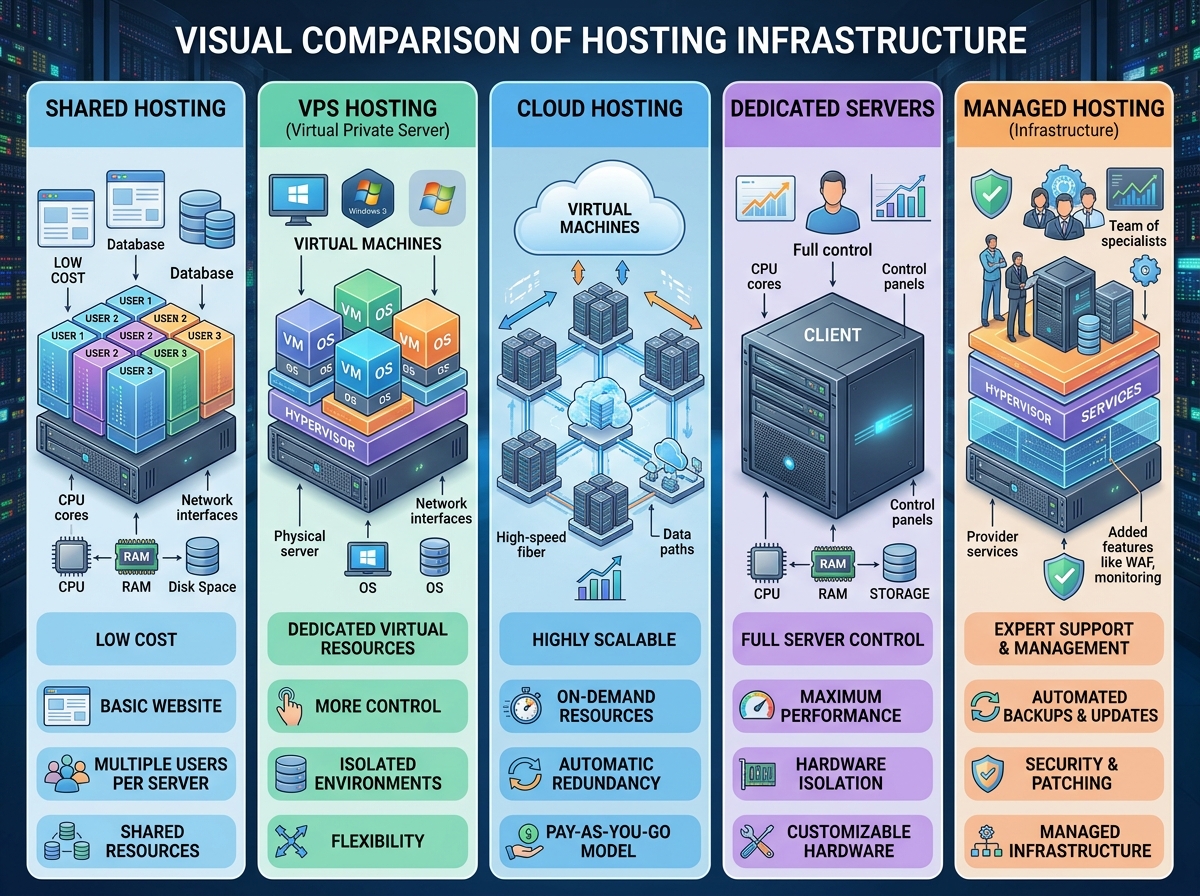
Understanding Different Types of Web Hosting
Before choosing a hosting provider, it’s helpful to understand the major hosting categories available today.
Shared Hosting
Shared hosting places multiple websites on the same server. It’s typically the most affordable hosting option and works well for:
- Personal blogs
- New websites
- Small business websites
- Portfolio sites
Advantages:
- Low cost
- Beginner-friendly
- Minimal technical management
Limitations:
- Shared resources
- Lower scalability
- Potential performance fluctuations
VPS Hosting
Virtual Private Server (VPS) hosting allocates dedicated resources within a virtualized environment.
Best for:
- Growing websites
- Medium-sized businesses
- Developers
- Resource-intensive applications
Advantages:
- Better performance
- Greater control
- Improved scalability
Dedicated Hosting
Dedicated hosting provides an entire physical server for a single customer.
Best for:
- Large businesses
- Enterprise websites
- High-traffic applications
Advantages:
- Maximum performance
- Complete server control
- High security
Cloud Hosting
Cloud hosting distributes resources across multiple interconnected servers.
Benefits include:
- High availability
- Flexible scaling
- Improved reliability
- Resource efficiency
Many of today’s best hosting providers use cloud-based infrastructure to deliver stronger performance and uptime.
Managed Hosting
Managed hosting services handle technical tasks such as:
- Server maintenance
- Security updates
- Monitoring
- Backups
- Performance optimization
Managed hosting is particularly popular among WordPress users and business owners who prefer focusing on growth rather than server administration.
Best Web Hosting Providers in 2026
Bluehost
Overview
Bluehost remains one of the most recognized hosting providers in the industry. Its beginner-friendly approach, WordPress integration, and affordable plans make it a popular choice for first-time website owners.
Key Features
- Free domain registration
- Free SSL certificate
- WordPress optimization
- One-click installations
- 24/7 customer support
- Website builder tools
Best Use Cases
Bluehost works particularly well for:
- Bloggers
- Small businesses
- Personal websites
- WordPress beginners
Advantages
- Easy setup process
- Strong WordPress support
- Beginner-friendly dashboard
- Established reputation
Limitations
- Renewal pricing may increase
- Some advanced features require upgrades
Who It Is Best For
Users launching their first website who want a straightforward hosting experience.
Verdict
Bluehost remains a reliable entry-level hosting provider for users seeking simplicity and dependable performance.
SiteGround
Overview
SiteGround has earned a strong reputation for excellent customer support, performance optimization, and managed hosting services.
Key Features
- Managed WordPress hosting
- Daily backups
- Built-in caching
- Advanced security tools
- CDN integration
- Developer-friendly features
Best Use Cases
Ideal for:
- Business websites
- Professional blogs
- Agencies
- Growing websites
Advantages
- Outstanding support
- Fast server performance
- Strong security measures
- Excellent uptime
Limitations
- Higher pricing than some competitors
- Storage limits on lower-tier plans
Who It Is Best For
Website owners prioritizing performance, security, and customer support.
Verdict
SiteGround consistently ranks among the most reliable hosting providers for businesses and professionals.
Hostinger
Overview
Hostinger has become a leading affordable hosting provider by combining low prices with surprisingly strong performance.
Key Features
- Competitive pricing
- LiteSpeed servers
- Free SSL
- Website builder
- Managed WordPress tools
- Global data centers
Best Use Cases
Suitable for:
- Budget-conscious users
- Startups
- Small businesses
- New website owners
Advantages
- Excellent affordability
- Fast loading speeds
- Modern control panel
- Strong value proposition
Limitations
- Some premium features reserved for higher plans
- Support response times can vary during peak periods
Who It Is Best For
Users seeking maximum value without sacrificing essential hosting performance.
Verdict
Hostinger offers one of the strongest combinations of affordability and performance available today.

A2 Hosting
Overview
A2 Hosting has built its reputation around speed-focused hosting solutions. The company emphasizes performance optimization and developer-friendly hosting environments.
Key Features
- Turbo server options
- SSD storage
- Developer tools
- Website migration assistance
- Enhanced caching systems
- Multiple hosting environments
Best Use Cases
- Performance-focused websites
- Developers
- Growing online businesses
- Content-heavy websites
Advantages
- Strong speed optimization
- Flexible hosting options
- Developer-friendly tools
- Reliable uptime
Limitations
- Advanced features may increase costs
- Interface may require a learning curve for beginners
Who It Is Best For
Users prioritizing website speed and technical flexibility.
Verdict
A2 Hosting remains a compelling choice for users seeking optimized website performance.
DreamHost
Overview
DreamHost has served website owners for decades and continues to offer reliable hosting solutions with transparent pricing and strong WordPress support.
Key Features
- Unlimited bandwidth on many plans
- WordPress optimization
- Free SSL certificates
- Automated backups
- Domain management
- Custom hosting dashboard
Best Use Cases
- Bloggers
- Small businesses
- WordPress users
- Content publishers
Advantages
- Transparent pricing
- Long-standing reputation
- Strong privacy practices
- Reliable performance
Limitations
- Custom dashboard differs from industry-standard interfaces
- Phone support options may be limited
Who It Is Best For
Users seeking a trusted provider with straightforward pricing and dependable service.
Verdict
DreamHost remains one of the most respected hosting providers for long-term website projects.
Choosing the Right Hosting Provider for Your Specific Needs
No single hosting provider is perfect for every website. The best option depends on your goals, traffic expectations, technical requirements, and budget.
For example:
- Personal blogs may benefit from affordable shared hosting.
- Small businesses often require managed hosting and stronger security.
- Ecommerce websites need performance, scalability, and uptime reliability.
- Developers may prioritize VPS hosting and server customization.
- Enterprise organizations often require dedicated or cloud infrastructure.
Understanding your current requirements while planning for future growth can help avoid costly migrations later.
At Retro Living Today, we recommend evaluating hosting providers based not only on current pricing but also on scalability, support quality, security infrastructure, and long-term value.
Additional Best Web Hosting Providers Worth Considering
While Bluehost, SiteGround, Hostinger, A2 Hosting, and DreamHost remain popular choices, several other providers excel in specific categories such as managed WordPress hosting, cloud hosting, ecommerce hosting, and enterprise-level performance.
Cloudways
Overview
Cloudways offers a unique managed cloud hosting platform that allows users to deploy websites on infrastructure from leading cloud providers. Instead of operating its own servers, Cloudways provides a management layer that simplifies cloud hosting.
Key Features
- Managed cloud hosting
- Flexible scaling
- Built-in caching
- Advanced security features
- Automated backups
- Staging environments
Best Use Cases
- Agencies
- Ecommerce stores
- High-traffic websites
- Developers
- Growing businesses
Advantages
- Excellent scalability
- High performance
- Multiple cloud provider options
- Strong security controls
Limitations
- More expensive than traditional shared hosting
- May be excessive for small personal websites
Who It Is Best For
Businesses expecting growth and needing enterprise-grade performance without managing servers directly.
Verdict
Cloudways is one of the strongest choices for users who want cloud hosting flexibility combined with managed hosting convenience.
WP Engine
Overview
WP Engine focuses exclusively on managed WordPress hosting. It is widely regarded as a premium solution for businesses, publishers, and organizations that rely heavily on WordPress.
Key Features
- Managed WordPress hosting
- Automated updates
- Daily backups
- Enterprise-grade security
- Staging environments
- Performance optimization
Best Use Cases
- Corporate websites
- High-traffic blogs
- Membership websites
- Professional publishers
Advantages
- Outstanding WordPress performance
- Excellent security
- Reliable uptime
- Premium support
Limitations
- Higher pricing
- WordPress-only environment
Who It Is Best For
Businesses that depend on WordPress and require maximum reliability.
Verdict
WP Engine remains one of the leading managed WordPress hosting platforms available.
Kinsta
Overview
Kinsta is another premium managed WordPress hosting provider built on cloud infrastructure. It has earned a reputation for speed, security, and scalability.
Key Features
- Managed WordPress hosting
- Cloud infrastructure
- Automatic backups
- Built-in CDN
- Security monitoring
- Advanced analytics
Best Use Cases
- Ecommerce stores
- Enterprise websites
- High-growth startups
- Content publishers
Advantages
- Excellent performance
- Strong scalability
- Premium support
- Robust security
Limitations
- Premium pricing structure
- Less suitable for very small websites
Who It Is Best For
Organizations seeking premium WordPress hosting with enterprise-level capabilities.
Verdict
Kinsta consistently ranks among the fastest and most reliable WordPress hosting providers.
InMotion Hosting
Overview
InMotion Hosting offers a broad range of hosting solutions including shared, VPS, dedicated, and managed hosting plans.
Key Features
- Free website migration
- SSD storage
- Security suite
- Business hosting plans
- VPS hosting
- Dedicated server options
Best Use Cases
- Small businesses
- Growing websites
- Agencies
- Professional service firms
Advantages
- Strong customer support
- Good performance
- Wide hosting selection
- Business-focused features
Limitations
- Interface can feel dated
- Some plans may require upgrades for advanced features
Who It Is Best For
Business owners seeking a dependable long-term hosting partner.
Verdict
InMotion Hosting remains a strong all-around solution for business websites.
HostGator
Overview
HostGator continues to be a recognizable name in web hosting thanks to its beginner-friendly plans and extensive hosting portfolio.
Key Features
- Shared hosting
- VPS hosting
- Dedicated servers
- Website builder
- Free SSL
- One-click installs
Best Use Cases
- New websites
- Personal blogs
- Small businesses
Advantages
- Easy setup
- Affordable entry pricing
- Large knowledge base
- Wide service selection
Limitations
- Performance may vary depending on plan
- Renewal rates can increase
Who It Is Best For
Users seeking affordable entry-level hosting.
Verdict
HostGator remains a practical option for users launching smaller websites.
ScalaHosting
Overview
ScalaHosting has gained attention for its VPS hosting solutions and proprietary server management technology.
Key Features
- Managed VPS hosting
- Security monitoring
- Website migration
- Dedicated resources
- Automated backups
Best Use Cases
- Businesses
- Developers
- Growing websites
- Resource-intensive applications
Advantages
- Strong VPS offerings
- Excellent scalability
- Competitive pricing
- Good security features
Limitations
- Shared hosting options are less prominent
- Some advanced features require technical understanding
Who It Is Best For
Website owners preparing to move beyond shared hosting.
Verdict
ScalaHosting offers excellent value in the managed VPS hosting market.

Best Web Hosting for Small Businesses
Small businesses have unique hosting needs. They often require affordability while maintaining professional reliability.
The ideal small business hosting provider should include:
- High uptime
- Strong customer support
- Free SSL certificate
- Business email capabilities
- Website backups
- Scalability
Top Small Business Recommendations
- SiteGround
- Hostinger
- Bluehost
- InMotion Hosting
- Cloudways
For many small businesses, managed hosting can reduce technical headaches and allow owners to focus on growth.
Best WordPress Hosting Providers
WordPress powers a significant percentage of websites worldwide, making specialized WordPress hosting increasingly valuable.
Why WordPress Hosting Matters
Optimized WordPress hosting typically includes:
- Automatic updates
- Enhanced security
- Improved caching
- WordPress-specific support
- Faster loading times
Top WordPress Hosting Providers
WP Engine
Best for businesses requiring premium managed hosting.
Kinsta
Excellent for high-performance WordPress websites.
SiteGround
Strong balance between affordability and performance.
Bluehost
Popular option for WordPress beginners.
DreamHost
Reliable and budget-friendly WordPress hosting.
WordPress Hosting Comparison
| Provider | Performance | Support | Ease of Use | Scalability |
|---|---|---|---|---|
| WP Engine | Excellent | Excellent | Excellent | Excellent |
| Kinsta | Excellent | Excellent | Very Good | Excellent |
| SiteGround | Very Good | Excellent | Excellent | Very Good |
| Bluehost | Good | Good | Excellent | Good |
| DreamHost | Good | Very Good | Good | Good |
Best Web Hosting for Ecommerce Websites
Ecommerce websites place significantly greater demands on hosting infrastructure than standard websites.
Online stores require:
- Fast page loading
- Payment security
- Strong uptime
- Scalability
- Inventory management compatibility
Top Ecommerce Hosting Providers
Cloudways
Excellent scalability for growing online stores.
Kinsta
Outstanding performance for WooCommerce websites.
SiteGround
Reliable ecommerce hosting with strong support.
InMotion Hosting
Business-friendly hosting plans.
Bluehost
Suitable for smaller ecommerce websites.
Ecommerce Hosting Considerations
When selecting ecommerce hosting, evaluate:
- PCI compliance capabilities
- Security infrastructure
- Backup systems
- Traffic handling capacity
- Payment gateway compatibility
- CDN integration
A slow ecommerce website can directly impact conversions and revenue, making hosting quality especially important.
Shared Hosting vs VPS Hosting vs Cloud Hosting
Choosing the right hosting type can be just as important as choosing the right provider.
Shared Hosting
Best for:
- New websites
- Personal blogs
- Small websites
Advantages:
- Lowest cost
- Easy management
Disadvantages:
- Limited resources
- Reduced flexibility
VPS Hosting
Best for:
- Growing businesses
- Resource-intensive websites
- Developers
Advantages:
- Dedicated resources
- Better performance
- Greater control
Disadvantages:
- Higher cost
- More technical management
Cloud Hosting
Best for:
- Growing companies
- Ecommerce businesses
- High-traffic websites
Advantages:
- Excellent scalability
- High reliability
- Flexible resources
Disadvantages:
- Can become more expensive as usage grows
Which Hosting Type Is Right for You?
Choose shared hosting if you’re launching your first website.
Choose VPS hosting if your website is growing and needs more resources.
Choose cloud hosting if reliability and scalability are top priorities.
Factors That Matter Most When Comparing Hosting Providers
Many consumers focus solely on price, but several other factors often have a greater impact on long-term success.
Website Uptime
Downtime can lead to:
- Lost revenue
- Reduced trust
- Lower search visibility
Look for providers with uptime guarantees of at least 99.9%.
Customer Support
Quality support is particularly valuable for:
- Small businesses
- Beginners
- Ecommerce websites
Security Features
Important security tools include:
- SSL certificates
- Malware protection
- Firewall systems
- Backups
- DDoS mitigation
Scalability
The best hosting providers allow businesses to grow without requiring complex migrations.
Performance
Hosting speed influences:
- User experience
- Bounce rates
- Search rankings
- Conversion rates
Many modern hosting providers now utilize NVMe storage, advanced caching, and CDN technology to improve performance.
Understanding Web Hosting Pricing and Long-Term Costs
One of the biggest mistakes website owners make is choosing a hosting provider based solely on introductory pricing. While promotional rates can look attractive, it’s important to evaluate the total cost of ownership over several years.
Many hosting companies offer significant discounts for first-time customers. However, renewal rates are often substantially higher. Before signing up, consider:
- Introductory pricing vs. renewal pricing
- Domain registration costs
- SSL certificate fees (if not included)
- Backup services
- Premium security tools
- Website migration fees
- Email hosting costs
- Additional storage or bandwidth charges
A provider that appears more expensive initially may actually provide better long-term value when essential features are included.
Typical Hosting Cost Ranges
| Hosting Type | Typical Monthly Range |
|---|---|
| Shared Hosting | $2–$15 |
| Managed WordPress Hosting | $15–$100+ |
| VPS Hosting | $20–$150+ |
| Cloud Hosting | Variable |
| Dedicated Hosting | $80–$500+ |
Businesses should evaluate hosting as an investment rather than an expense. Reliable hosting can directly contribute to higher search visibility, improved user experience, and stronger conversion rates.
Website Security: Why Hosting Matters More Than Ever
Cybersecurity is no longer optional. Small business websites, ecommerce stores, blogs, and enterprise websites all face increasing security threats.
A secure hosting provider can significantly reduce risk.
Essential Hosting Security Features
SSL Certificates
SSL encryption protects data transmitted between visitors and websites. It also plays a role in user trust and search visibility.
Automated Backups
Backups provide protection against:
- Human error
- Website crashes
- Malware infections
- Software conflicts
Malware Scanning
Modern hosting providers often include automated malware detection and removal tools.
DDoS Protection
Distributed Denial of Service (DDoS) attacks can overwhelm websites with traffic. Advanced hosting providers offer mitigation systems to help maintain availability.
Account Isolation
Shared hosting environments should isolate websites to reduce cross-account vulnerabilities.
Security Best Practices for Website Owners
Even with excellent hosting, website owners should:
- Use strong passwords
- Enable two-factor authentication
- Update plugins regularly
- Remove unused software
- Monitor user permissions
- Conduct periodic security audits
Hosting security works best when combined with responsible website management.
Website Performance and SEO: The Hosting Connection
Website speed has become a critical ranking and user experience factor.
Slow websites often experience:
- Higher bounce rates
- Lower engagement
- Reduced conversions
- Poorer search performance
How Hosting Influences Performance
Server Quality
Higher-quality servers deliver faster response times.
Storage Technology
Modern NVMe and SSD storage typically outperform traditional hard drives.
Content Delivery Networks (CDNs)
CDNs distribute website content across multiple locations, helping visitors access content faster regardless of geography.
Resource Allocation
Hosting plans with sufficient resources can handle traffic spikes more effectively.
Caching Systems
Advanced caching can significantly reduce page load times.
Performance Metrics Worth Monitoring
Website owners should regularly review:
- Server response times
- Core Web Vitals
- Uptime performance
- Largest Contentful Paint (LCP)
- Time to First Byte (TTFB)
- Page load speed
For businesses that depend on online traffic, investing in faster hosting often delivers measurable returns.
How to Choose the Best Web Hosting Provider
Selecting the right hosting provider depends on your specific goals rather than simply choosing the most popular brand.
For Beginners
Recommended priorities:
- Easy setup
- User-friendly dashboard
- Affordable pricing
- Reliable support
Strong options:
- Bluehost
- Hostinger
- HostGator
For Small Businesses
Recommended priorities:
- Uptime
- Security
- Scalability
- Professional support
Strong options:
- SiteGround
- InMotion Hosting
- Cloudways
For Ecommerce Websites
Recommended priorities:
- Performance
- Security
- Scalability
- Reliability
Strong options:
- Cloudways
- Kinsta
- SiteGround
For Developers
Recommended priorities:
- Server access
- Flexible environments
- VPS capabilities
- Staging tools
Strong options:
- ScalaHosting
- Cloudways
- A2 Hosting
For High-Traffic Websites
Recommended priorities:
- Cloud infrastructure
- Premium support
- Enterprise reliability
Strong options:
- Kinsta
- WP Engine
- Cloudways
The best web hosting provider is the one that aligns with your current needs while allowing room for future growth.
Future Web Hosting Trends for 2026 and Beyond
The hosting industry continues to evolve rapidly. Several trends are likely to shape the future of web hosting.
AI-Powered Infrastructure Management
Artificial intelligence is increasingly used to:
- Detect security threats
- Predict hardware failures
- Optimize server resources
- Improve performance monitoring
Green Hosting Initiatives
Sustainability is becoming a major consideration for hosting providers. Many companies are investing in:
- Renewable energy
- Carbon reduction programs
- Energy-efficient data centers
Edge Computing
Edge infrastructure helps reduce latency by moving content closer to end users.
Enhanced Security Automation
Hosting providers are expanding automated security tools that identify and respond to threats in real time.
Greater Cloud Adoption
Cloud hosting continues to gain market share due to its scalability and reliability advantages.
Businesses choosing hosting today should consider providers that are investing in future technologies rather than simply meeting current requirements.
Frequently Asked Questions
What is the best web hosting provider for small businesses?
SiteGround, Hostinger, Cloudways, and InMotion Hosting are among the best web hosting providers for small businesses due to their reliability, security features, customer support, and scalability.
Which web hosting provider offers the best value for money?
Hostinger is frequently recognized for offering strong performance, modern features, and affordable pricing, making it an attractive option for budget-conscious users.
Is cloud hosting better than shared hosting?
Cloud hosting generally offers greater scalability, reliability, and performance. Shared hosting is more affordable and suitable for smaller websites with lower traffic levels.
What is the best hosting provider for WordPress websites?
WP Engine, Kinsta, SiteGround, Bluehost, and DreamHost are among the most popular WordPress hosting providers depending on budget and performance requirements.
How important is uptime when choosing a hosting provider?
Uptime is extremely important because website downtime can negatively impact revenue, user experience, and search engine visibility. Most reputable providers offer uptime guarantees of at least 99.9%.
Can I switch hosting providers later?
Yes. Most websites can migrate to a different hosting provider. Many hosts also offer free migration assistance to simplify the process.
Do I need managed hosting?
Managed hosting can be beneficial for businesses, ecommerce websites, and users who prefer not to handle technical maintenance tasks themselves.
What security features should a hosting provider include?
At a minimum, look for free SSL certificates, automated backups, malware scanning, firewall protection, and DDoS mitigation.
How much should I spend on web hosting?
The ideal budget depends on your website’s size and goals. Small websites may succeed on affordable shared hosting, while growing businesses often benefit from premium managed or cloud hosting.
Which hosting type is best for ecommerce websites?
Cloud hosting and premium managed hosting are often the best choices for ecommerce websites because they provide strong performance, security, and scalability.
Final Verdict: Which Web Hosting Provider Should You Choose?
The web hosting market offers more choices than ever, but not every provider serves the same audience.
For beginners and personal websites, Bluehost and Hostinger offer affordable entry points with user-friendly tools.
For small businesses, SiteGround and InMotion Hosting provide an excellent balance of performance, support, and reliability.
For growing online stores and professional organizations, Cloudways delivers impressive scalability and cloud infrastructure flexibility.
For premium WordPress hosting, Kinsta and WP Engine continue to set industry benchmarks for speed, security, and managed services.
The most important takeaway is that hosting should be viewed as a long-term foundation for your website rather than a simple utility purchase. Factors such as uptime, security, scalability, customer support, and performance often have a greater impact on success than introductory pricing alone.
At Retro Living Today, we recommend evaluating hosting providers based on your current requirements, future growth plans, technical expertise, and overall business goals. Investing in the right hosting platform from the beginning can help create a faster, safer, and more reliable online presence for years to come.
Whether you’re launching your first blog, building an ecommerce store, or expanding a growing business website, choosing one of the best web hosting providers highlighted in this guide will put your project on a stronger foundation.