
Working from home is no longer a temporary trend. For millions of professionals, freelancers, entrepreneurs, remote employees, and content creators, the home office has become a permanent part of daily life. While many people focus on monitors, desks, and productivity software, one of the most important investments in any workspace is often overlooked: the office chair.
A poorly designed chair can lead to discomfort, reduced productivity, poor posture, fatigue, and long-term physical strain. On the other hand, a well-designed ergonomic office chair can improve focus, support healthy sitting habits, and make long workdays significantly more comfortable.
The challenge is that today’s market offers hundreds of options. From affordable budget chairs to premium ergonomic seating solutions, choosing the right office chair can quickly become overwhelming. Features such as lumbar support, adjustable armrests, seat depth adjustment, breathable mesh backs, reclining mechanisms, and headrests all play a role in determining which chair is right for you.
At Retro Living Today, we believe home office furniture should balance comfort, functionality, and style. The best office chair isn’t necessarily the most expensive model—it’s the one that matches your body type, work habits, workspace size, and budget.
This guide explores everything you need to know before buying an office chair for your home office. We’ll discuss essential ergonomic features, explain what makes a chair truly supportive, compare budget versus premium options, and review the best office chairs available in 2026.
Whether you’re searching for the best office chair for back support, long working hours, remote work productivity, or a compact home office setup, this guide will help you make an informed decision.
Why Your Home Office Chair Matters More Than You Think
Many people spend between six and ten hours per day sitting at a desk. Over weeks, months, and years, this adds up to thousands of hours spent in the same position.
The quality of your chair directly influences:
- Posture
- Spinal alignment
- Lower back comfort
- Neck support
- Shoulder positioning
- Blood circulation
- Productivity levels
- Energy throughout the day
Research from leading ergonomics experts has consistently shown that workstation design significantly impacts workplace comfort and performance. When a chair properly supports the body, users tend to experience less fatigue and greater concentration during extended work sessions.
Remote workers face unique challenges because many home offices were created quickly during the work-from-home transition. Dining chairs, kitchen stools, and inexpensive seating solutions often became temporary office furniture—and many remain in use today.
If you regularly experience:
- Lower back discomfort
- Neck stiffness
- Shoulder tension
- Hip soreness
- Leg numbness
- Fatigue after work
your chair could be contributing to the problem.
Investing in a quality ergonomic office chair is not simply about comfort; it’s about creating a healthier and more productive work environment.
What Makes an Office Chair Truly Ergonomic?
The term “ergonomic” is frequently used in marketing, but not every chair labeled ergonomic actually provides meaningful support.
A truly ergonomic office chair adapts to the user rather than forcing the user to adapt to the chair.
Key ergonomic principles include:
Adjustable Seat Height
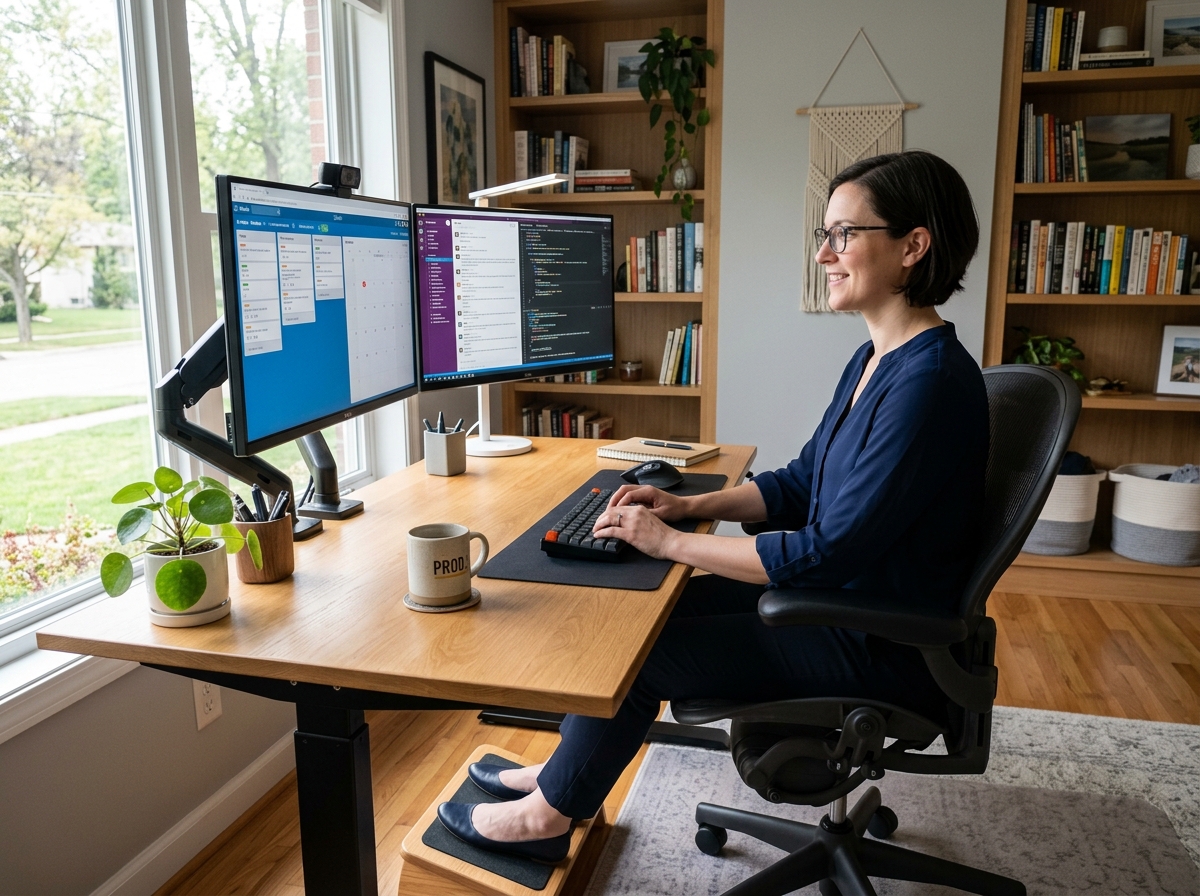
Your feet should rest flat on the floor while your knees remain at approximately a 90-degree angle.
Proper seat height helps:
- Improve circulation
- Reduce leg fatigue
- Promote better posture
Lumbar Support
The lower back naturally curves inward. Quality lumbar support helps maintain this natural curve and reduces stress on the spine.
The best office chairs for home offices often include:
- Adjustable lumbar support
- Dynamic lumbar systems
- Height-adjustable support mechanisms
Seat Depth Adjustment
Seat depth determines how far the seat extends beneath your legs.
An ideal seat allows:
- Two to three finger widths between the seat edge and knees
- Proper thigh support
- Improved circulation
Adjustable Armrests
Armrests should support your forearms without causing shoulder elevation.
Look for:
- Height adjustment
- Width adjustment
- Pivot adjustment
- Depth adjustment
Recline Functionality
Dynamic movement encourages healthier sitting habits.
Modern ergonomic chairs often offer:
- Tilt lock
- Synchro tilt
- Weight-sensitive recline
- Multi-position reclining
Breathable Materials
Mesh office chairs have become popular because they improve airflow and reduce heat buildup during long work sessions.
Breathable materials are particularly valuable for:
- Warm climates
- Long workdays
- Small home office environments
Key Features to Consider Before Buying an Office Chair
Not every office chair is suitable for every person. The ideal choice depends on your daily work routine and individual requirements.
Your Daily Sitting Time
For occasional computer use, a basic task chair may be sufficient.
However, if you spend:
- 6+ hours per day working
- Full-time remote working
- Long gaming sessions
- Content creation
- Programming
- Design work
you should strongly consider investing in a premium ergonomic model.
Body Type and Height
Many chairs perform exceptionally well for average-sized users but fail to accommodate taller or shorter individuals.
Important considerations include:
- Maximum weight capacity
- Seat width
- Seat depth
- Backrest height
- Headrest adjustability
Workspace Size
A compact apartment office requires different furniture than a dedicated home office.
Small-space users may benefit from:
- Armless designs
- Compact footprints
- Foldable armrests
- Lightweight frames
Style and Aesthetics
Modern home offices increasingly serve multiple purposes.
Popular styles include:
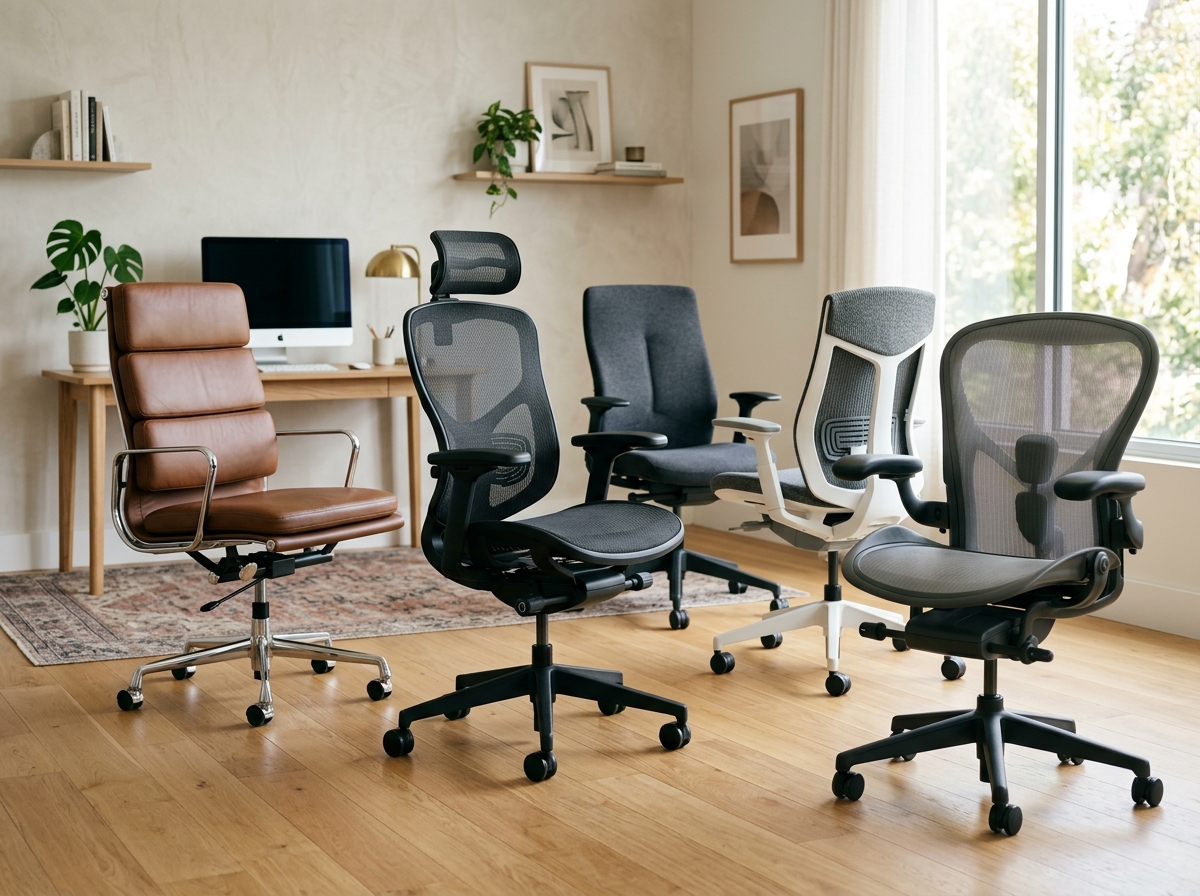
- Contemporary mesh chairs
- Mid-century inspired office seating
- Executive leather chairs
- Minimalist Scandinavian designs
- Hybrid work-from-home furniture
At Retro Living Today, we often recommend choosing a chair that complements your overall workspace design while still prioritizing ergonomics.
Budget
Office chairs typically fall into four categories:
Budget ($100-$250)
Good for casual users and smaller budgets.
Mid-Range ($250-$600)
Excellent balance of value and performance.
Premium ($600-$1,200)
Advanced ergonomic features and superior durability.
Luxury ($1,200+)
Industry-leading support systems and long-term warranties.
Best Types of Office Chairs for Home Offices
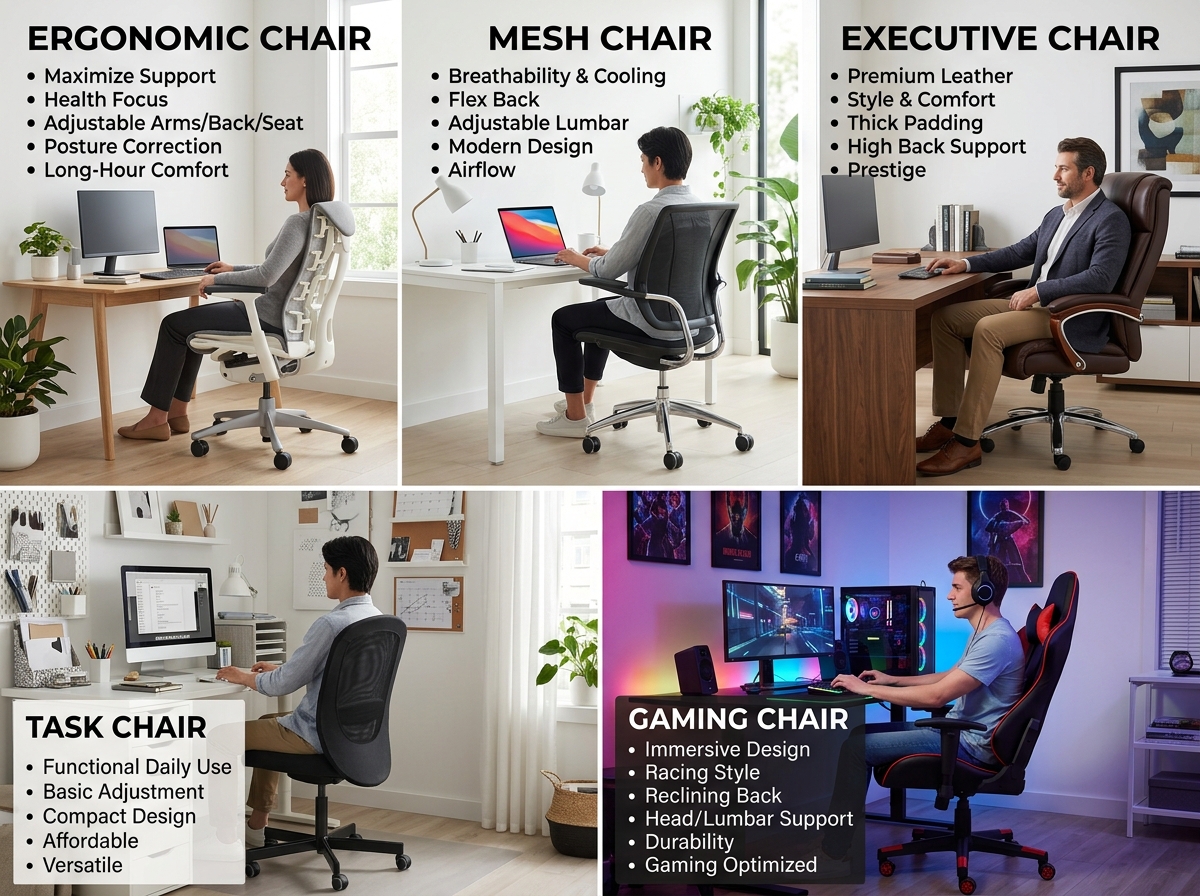
Choosing the right category of office chair is often more important than choosing a specific model.
Ergonomic Office Chairs
Best for:
- Remote workers
- Professionals
- Long work sessions
- Productivity-focused users
Advantages:
- Maximum adjustability
- Better posture support
- Long-term comfort
Limitations:
- Higher cost
- More complex adjustment settings
Mesh Office Chairs
Best for:
- Warm environments
- Long sitting periods
- Breathability
Advantages:
- Excellent airflow
- Modern appearance
- Lightweight design
Limitations:
- Less cushioning
- Some users prefer padded seating
Executive Office Chairs
Best for:
- Home executives
- Private offices
- Premium aesthetics
Advantages:
- Luxurious appearance
- Plush comfort
- Professional design
Limitations:
- Less breathable
- Often larger footprints
Task Chairs
Best for:
- Small offices
- Students
- Occasional use
Advantages:
- Affordable
- Compact
- Easy mobility
Limitations:
- Fewer ergonomic features
- Less support for long hours
Gaming Chairs
Best for:
- Hybrid work and gaming setups
- Content creators
- Streamers
Advantages:
- High-back support
- Bold designs
- Reclining functionality
Limitations:
- Not always ergonomically optimized
- Styling may not suit professional offices
How to Choose the Best Office Chair for Back Support
Back support remains the most common concern among home office workers.
When evaluating chairs for lower back comfort, focus on:
Adjustable Lumbar Support
The support should align with the natural curve of your lower spine.
Dynamic Reclining
Movement helps reduce pressure concentration and promotes healthy posture changes throughout the day.
Proper Seat Depth
Incorrect seat depth often causes users to slouch or lean forward.
Head and Neck Support
For users spending long hours in meetings or video calls, a supportive headrest can reduce upper-body strain.
Posture-Friendly Design
The best office chair should encourage:
- Neutral spine alignment
- Relaxed shoulders
- Supported lower back
- Proper leg positioning
Many buyers focus exclusively on cushioning, but ergonomic support is often more important than softness when evaluating chairs for long-term use.
Suggested External References
- Occupational Safety and Health Administration (OSHA) Ergonomics Resources
- Mayo Clinic Workplace Ergonomics Guide
- Cornell University Ergonomics Research Lab
- National Institute for Occupational Safety and Health (NIOSH)
Selecting the right office chair is highly personal. A chair that feels perfect for a software developer working eight hours a day may not be ideal for a freelancer, designer, student, or executive. In this section, we review some of the most respected office chairs available in 2026, covering premium, mid-range, and budget-friendly options. Our selections focus on ergonomics, adjustability, durability, comfort, value for money, and suitability for home office environments.
Premium Office Chairs
Premium office chairs often cost more upfront, but they typically offer superior ergonomics, better materials, longer warranties, and greater long-term value.
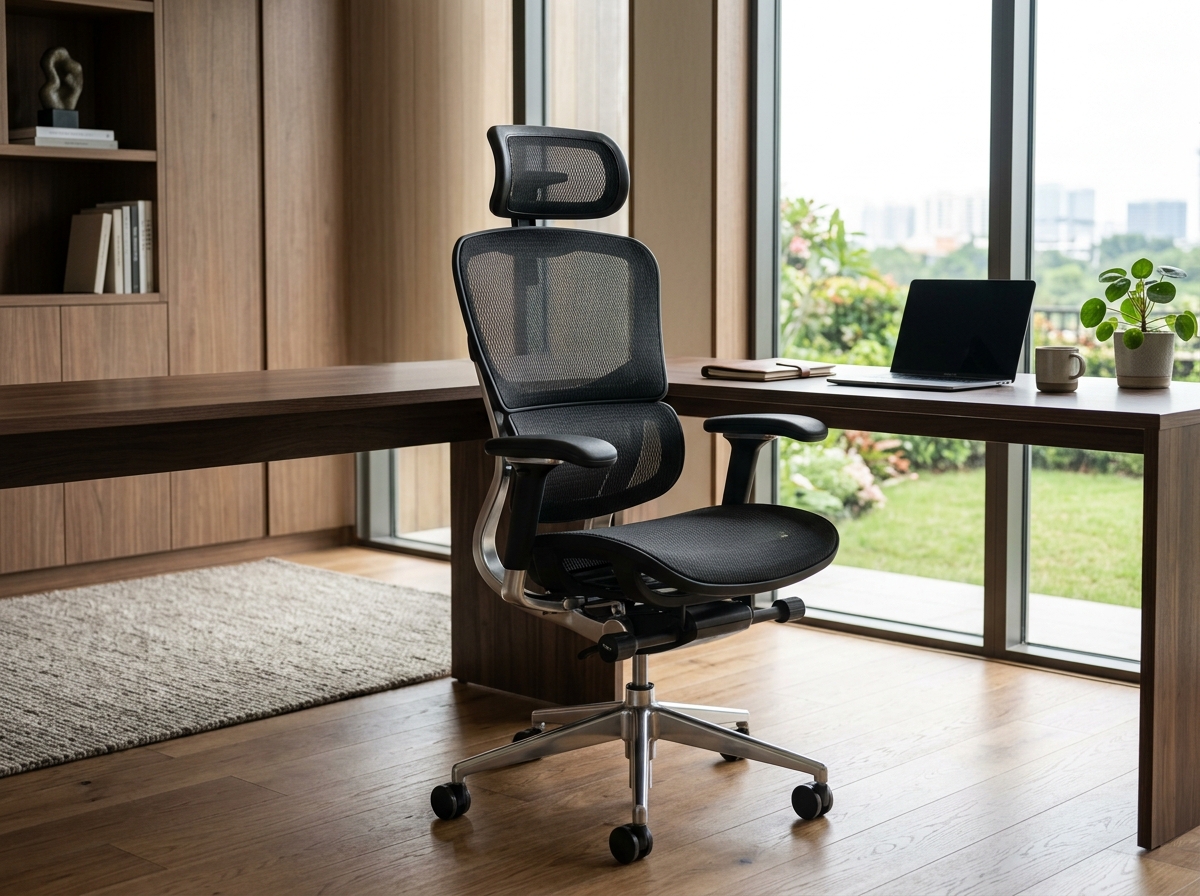
Herman Miller Aeron
Overview
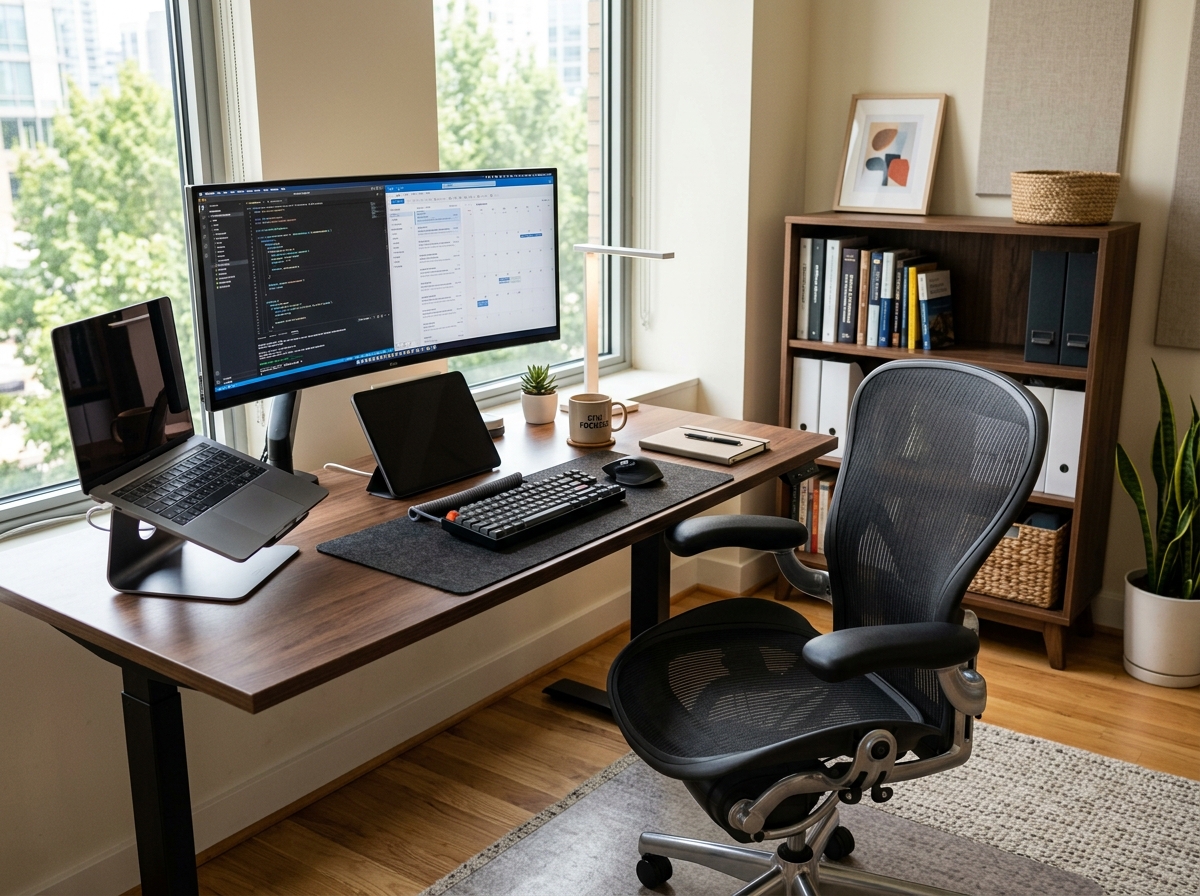
The Herman Miller Aeron remains one of the most iconic ergonomic office chairs ever created. Frequently found in corporate offices and home workspaces alike, the Aeron is designed to provide exceptional support during long work sessions.
Key Features
- Breathable Pellicle mesh material
- PostureFit SL spinal support
- Multiple size options
- Adjustable recline and tilt
- Premium ergonomic engineering
Best Use Cases
- Full-time remote workers
- Executives
- Professionals spending 8+ hours daily at a desk
- Users prioritizing posture support
Advantages
- Outstanding build quality
- Excellent airflow
- Industry-leading ergonomics
- Exceptional warranty support
Limitations
- Premium price point
- Less padded than traditional chairs
- Learning curve for adjustments
Who It Is Best For
Professionals seeking long-term ergonomic support and willing to invest in a premium workspace setup.
Verdict
The Aeron remains one of the best office chairs for home offices due to its durability, adjustability, and ergonomic excellence. It is particularly appealing for users focused on productivity and spinal support.
Steelcase Leap
Overview
The Steelcase Leap has earned a reputation as one of the most adaptable office chairs available. Its LiveBack technology helps the chair move with the user throughout the day.
Key Features
- Adjustable lumbar support
- Flexible seat edge
- LiveBack technology
- Multiple ergonomic adjustments
- Long-term durability
Best Use Cases
- Professionals working long hours
- Remote employees
- Programmers
- Writers
Advantages
- Exceptional adjustability
- Comfortable for extended use
- Strong lower-back support
- Durable construction
Limitations
- Expensive compared to mid-range options
- Less breathable than mesh-focused chairs
Who It Is Best For
Users who value customization and spend most of their workday seated.
Verdict
The Steelcase Leap consistently ranks among the best ergonomic office chairs because it adapts exceptionally well to different body types and working styles.
Steelcase Gesture
Overview
Designed with modern technology users in mind, the Steelcase Gesture supports a wide variety of sitting positions and device usage habits.
Key Features
- Highly adjustable armrests
- Flexible seat design
- Advanced ergonomic support
- Wide recline range
Best Use Cases
- Multi-device users
- Creative professionals
- Hybrid workers
- Home office professionals
Advantages
- Excellent armrest flexibility
- Supports diverse postures
- Premium build quality
Limitations
- High cost
- Limited color options in some regions
Who It Is Best For
People who frequently switch between laptops, tablets, phones, and desktop workstations.
Verdict
For modern remote workers, the Gesture is among the most versatile office chairs available today.
Best Mid-Range Office Chairs
Not everyone needs a $1,500 office chair. Fortunately, several mid-range models provide outstanding comfort and ergonomic support at a more accessible price point.
Branch Ergonomic Chair
Overview
Branch has become increasingly popular among remote workers due to its balance of affordability, ergonomics, and modern aesthetics.
Key Features
- Adjustable lumbar support
- Mesh backrest
- Adjustable armrests
- Compact design
Best Use Cases
- Home offices
- Small workspaces
- Remote employees
Advantages
- Great value
- Stylish appearance
- Comfortable support
Limitations
- Fewer premium adjustments
- Smaller warranty than some competitors
Who It Is Best For
Professionals seeking strong ergonomics without entering premium price territory.
Verdict
One of the best office chairs for home office setups where value and design are equally important.
Autonomous ErgoChair Pro
Overview
The ErgoChair Pro has become a favorite among remote workers thanks to its modern design and comprehensive ergonomic features.
Key Features
- Dynamic lumbar support
- Adjustable headrest
- Reclining functionality
- Breathable mesh construction
Best Use Cases
- Remote work
- Content creation
- Daily office tasks
Advantages
- Strong ergonomic package
- Attractive design
- Good adjustability
Limitations
- Build quality can vary
- Assembly may take time
Who It Is Best For
Remote professionals looking for premium-inspired features at a mid-range price.
Verdict
A strong contender for anyone seeking an ergonomic chair for working from home.
SIHOO Doro Series
Overview
SIHOO has gained significant attention in recent years for delivering ergonomic features typically found in more expensive chairs.
Key Features
- Adjustable lumbar support
- Headrest adjustment
- Mesh construction
- Multiple recline positions
Best Use Cases
- Home office workers
- Students
- Budget-conscious professionals
Advantages
- Excellent value
- Modern ergonomic features
- Breathable design
Limitations
- Premium feel not quite on par with high-end brands
- Limited customization options
Who It Is Best For
Buyers seeking maximum ergonomic value for their budget.
Verdict
One of the strongest value-focused ergonomic office chairs available in 2026.
FlexiSpot Ergonomic Office Chair
Overview
Known primarily for standing desks, FlexiSpot also offers ergonomic seating designed for home office users.
Key Features
- Adjustable support systems
- Breathable mesh materials
- Modern aesthetics
- Reclining functionality
Best Use Cases
- Home office setups
- Hybrid workstations
- Standing desk users
Advantages
- Complements ergonomic desk setups
- Comfortable support
- Competitive pricing
Limitations
- Fewer advanced features than premium competitors
Who It Is Best For
Workers building a complete ergonomic workspace.
Verdict
An excellent companion for modern home office environments.
Frequently Asked Questions
What is the best office chair for working from home?
The best office chair for working from home depends on your budget and work habits. Premium options like the Herman Miller Aeron and Steelcase Leap excel for full-time professionals, while chairs such as the Branch Ergonomic Chair and SIHOO Doro Series provide excellent value for most users.
Are ergonomic office chairs worth the investment?
Yes. Ergonomic office chairs offer better adjustability, posture support, and long-term comfort than many standard chairs. For people spending several hours per day at a desk, they can significantly improve the overall work experience.
What is the best office chair for lower back support?
The Steelcase Leap is widely regarded as one of the best office chairs for lower back support due to its adjustable lumbar system and adaptive backrest design.
How much should I spend on a home office chair?
For most remote workers, a budget between $250 and $700 provides access to excellent ergonomic features. Full-time professionals may benefit from investing in premium chairs costing $900 or more.
Is a mesh office chair better than a cushioned office chair?
Mesh chairs generally provide superior airflow and temperature regulation. Cushioned chairs may feel softer initially, but personal preference and support quality are more important than material choice alone.
Which office chair is best for long working hours?
The Herman Miller Aeron and Steelcase Leap consistently rank among the best office chairs for long working hours due to their ergonomic engineering and pressure-distribution systems.
What features should a home office chair have?
Look for:
- Adjustable seat height
- Lumbar support
- Adjustable armrests
- Recline functionality
- Breathable materials
- Stable base construction
These features contribute to long-term comfort and usability.
Are gaming chairs good for office work?
Some gaming chairs, particularly premium models like the Secretlab Titan Evo, can perform well in office environments. However, many ergonomic office chairs provide superior posture support for prolonged professional use.
What office chair is best for small home offices?
Compact ergonomic models such as the Branch Ergonomic Chair often work well in smaller workspaces because they offer strong support without occupying excessive floor space.
How long should a quality office chair last?
A well-built office chair can last anywhere from seven to fifteen years, depending on usage, build quality, maintenance, and materials.
Conclusion
Finding the best office chair for a home office is about far more than choosing the most popular model or the lowest price. The right chair should support your posture, accommodate your body type, complement your workspace, and remain comfortable throughout long work sessions.
For professionals who spend most of their day at a desk, investing in a quality ergonomic chair can have a meaningful impact on comfort, focus, and overall productivity. Features such as adjustable lumbar support, armrests, seat depth, and recline functionality are no longer luxuries—they are important elements of a healthy and efficient workspace.
Among the options reviewed in this guide, the Herman Miller Aeron continues to set the benchmark for premium ergonomics, while the Steelcase Leap offers exceptional back support and adjustability. For value-focused buyers, the Branch Ergonomic Chair and SIHOO Doro Series provide impressive performance without premium pricing. Budget-conscious shoppers can still find excellent comfort in models such as the IKEA Markus and HON Ignition 2.0.
Ultimately, the best office chair for your home office is the one that supports your daily routine, encourages healthy sitting habits, and helps you perform at your best. By evaluating your workspace, work style, ergonomic needs, and budget, you can make a confident decision that delivers comfort and value for years to come.
At Retro Living Today, we believe great home office design should combine comfort, functionality, and style. Explore our other buying guides, workspace inspiration articles, and home office resources to create a workspace that works as hard as you do.