

Selecting the right web hosting provider is one of the most important decisions website owners make. Whether you’re launching a personal blog, building an online store, running a small business website, or managing multiple client projects, your hosting provider directly affects your site’s speed, uptime, security, and scalability.
Two names consistently appear among the most recommended hosting companies: Bluehost and Hostinger. Both providers have built strong reputations in the web hosting industry, offering affordable plans, beginner-friendly interfaces, and WordPress compatibility. However, while they may appear similar at first glance, there are significant differences in pricing structures, performance, customer support, features, and long-term value.
At Retro Living Today, we frequently evaluate digital tools and technology services to help readers make informed purchasing decisions. Bluehost and Hostinger remain among the most searched hosting providers globally, making this comparison especially valuable for website owners looking for the best hosting solution in 2026.
This comprehensive Bluehost vs Hostinger comparison explores everything from hosting plans and performance benchmarks to security features and customer support. By the end of this guide, you’ll understand which provider is best suited for your specific goals.
Bluehost Overview
What Is Bluehost?
Bluehost is one of the most established web hosting providers in the industry. Founded in 2003, the company has become particularly known for its strong relationship with WordPress and its beginner-friendly hosting environment.
Bluehost offers:
- Shared Hosting
- WordPress Hosting
- VPS Hosting
- Dedicated Hosting
- WooCommerce Hosting
- Cloud Hosting Solutions
- Domain Registration
Many beginners choose Bluehost because of its simple setup process and extensive educational resources.
Key Features
- Free domain for the first year
- One-click WordPress installation
- Free SSL certificate
- Website staging tools
- Integrated marketing tools
- Automatic WordPress updates
- 24/7 customer support
Best Use Cases
Bluehost is particularly suitable for:
- New bloggers
- Small business websites
- WordPress beginners
- Portfolio websites
- Affiliate marketers
Advantages
- Easy onboarding process
- Strong WordPress integration
- Extensive knowledge base
- Reliable uptime
- Good scalability options
Limitations
- Higher renewal rates
- Performance can vary on entry-level plans
- Additional upsells during checkout
Verdict
Bluehost remains an excellent choice for users who want a straightforward hosting experience backed by a long-established company.

Hostinger Overview
What Is Hostinger?
Hostinger has rapidly become one of the fastest-growing hosting companies in the world. Known for aggressive pricing and impressive performance metrics, Hostinger appeals to budget-conscious users who still want premium features.
Unlike many traditional hosting providers, Hostinger developed its own custom control panel called hPanel, offering a modern alternative to cPanel.
Key Features
- Competitive pricing
- LiteSpeed web servers
- Free SSL certificates
- Website migration services
- Managed WordPress features
- Global data centers
- AI-powered website builder
Best Use Cases
Hostinger works well for:
- Budget-conscious website owners
- Bloggers
- Startups
- Freelancers
- Agencies managing multiple sites
Advantages
- Excellent value for money
- Strong performance benchmarks
- Fast loading speeds
- Beginner-friendly interface
- Affordable long-term plans
Limitations
- Some advanced features reserved for higher plans
- Custom panel may require adjustment for cPanel users
Verdict
Hostinger offers exceptional value and has become one of the strongest competitors in the budget hosting market.

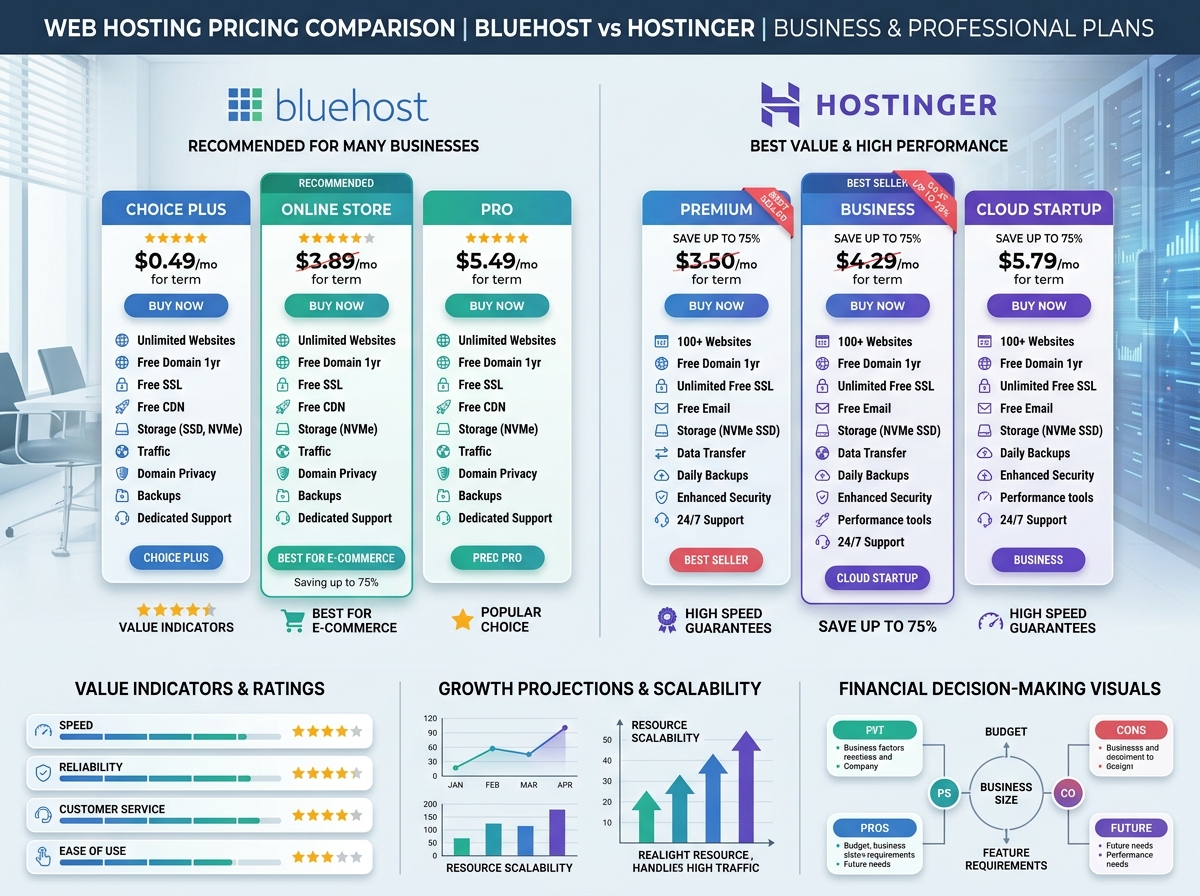
Bluehost vs Hostinger Pricing Comparison
Pricing is often the first factor users consider.
Bluehost Pricing
Typical Bluehost plans include:
- Basic Plan
- Choice Plus Plan
- Online Store Plan
- Pro Plan
Initial promotional pricing is attractive, but renewal costs can increase substantially.
Hostinger Pricing
Hostinger typically offers:
- Single Website Hosting
- Premium Hosting
- Business Hosting
- Cloud Hosting
Hostinger frequently maintains lower pricing even after renewals compared to many competitors.
Which Is More Affordable?
For budget-conscious users:
Winner: Hostinger
Hostinger generally provides:
- Lower introductory pricing
- Better feature-to-cost ratio
- More storage on entry plans
- Lower long-term expenses
However, Bluehost’s pricing may still appeal to users seeking stronger WordPress-specific support.
Bluehost vs Hostinger Performance Comparison
Website speed impacts:
- SEO rankings
- User experience
- Conversion rates
- Bounce rates
Bluehost Performance
Bluehost delivers:
- Solid uptime
- Decent page loading speeds
- SSD storage
- CDN integrations
Performance is generally reliable for small and medium websites.
Hostinger Performance
Hostinger has invested heavily in:
- LiteSpeed servers
- Advanced caching
- Global data centers
- Optimized WordPress environments
Many independent benchmarks consistently show Hostinger outperforming traditional shared hosting competitors.
Speed Test Comparison
Hostinger often demonstrates:
- Faster Time To First Byte (TTFB)
- Better global loading times
- Improved scalability under traffic spikes
Uptime Comparison
Both providers maintain excellent uptime records.
Performance Winner
Winner: Hostinger
For users prioritizing website speed and technical performance, Hostinger generally provides a stronger overall package.

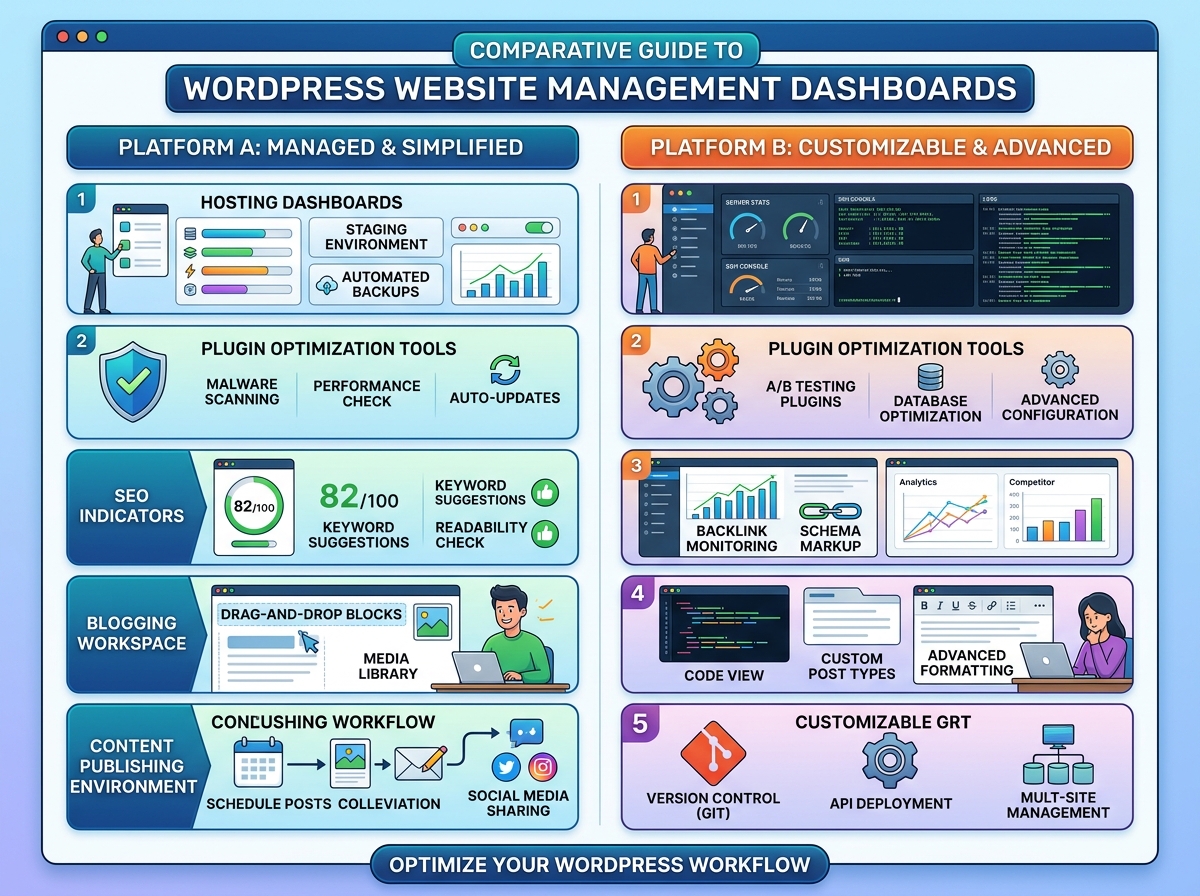
Bluehost vs Hostinger for WordPress
WordPress powers a large portion of the internet.
Bluehost WordPress Hosting
Benefits include:
- Official WordPress recommendation
- One-click installations
- Automatic updates
- WordPress-specific support
Hostinger WordPress Hosting
Benefits include:
- Managed WordPress optimization
- LiteSpeed cache integration
- AI tools
- Automatic updates
Which Is Better for WordPress?
For beginners:
Bluehost remains highly accessible.
For speed and value:
Hostinger often delivers superior performance.
WordPress Winner
Tie
The best choice depends on your priorities.
Bluehost vs Hostinger Security Features
Security should never be overlooked.
Bluehost Security
Features include:
- Free SSL
- Malware scanning options
- DDoS protection
- SiteLock integrations
Hostinger Security
Features include:
- Free SSL certificates
- Cloudflare protection
- DDoS mitigation
- Automated backups
- Security monitoring
Security Winner
Slight Edge: Hostinger
Hostinger often includes more security-related features within standard plans.

Bluehost vs Hostinger Customer Support
Customer support becomes crucial when problems occur.
Bluehost Support
Offers:
- Live chat
- Phone support
- Knowledge base
- Tutorials
Hostinger Support
Offers:
- Live chat
- Extensive knowledge center
- Guided troubleshooting
- Multilingual support
Support Winner
Bluehost
Phone support gives Bluehost an advantage for users who prefer speaking directly with support agents.

Bluehost vs Hostinger for Different User Types
Bloggers
Recommended: Hostinger
Reasons:
- Lower cost
- Faster loading times
- Better performance value
Small Business Owners
Recommended: Bluehost
Reasons:
- Easier onboarding
- Strong support ecosystem
Ecommerce Stores
Recommended: Hostinger
Reasons:
- Better performance
- Improved scalability
Agencies
Recommended: Hostinger
Reasons:
- Better resource allocation
- Competitive pricing
Beginners
Recommended: Bluehost
Reasons:
- Simpler setup experience
- Extensive tutorials

Bluehost Pros and Cons
Pros
- Strong WordPress integration
- Beginner-friendly
- Phone support
- Established reputation
- Free domain offer
Cons
- Higher renewals
- Upselling during checkout
- Performance not always market-leading
Hostinger Pros and Cons
Pros
- Outstanding value
- Excellent speed
- Modern interface
- Affordable plans
- Strong security features
Cons
- No traditional phone support
- Some advanced features require upgrades
Final Verdict: Bluehost vs Hostinger
After evaluating pricing, performance, WordPress compatibility, security, customer support, and overall value, Hostinger emerges as the stronger choice for most users in 2026.
Choose Bluehost If:
- You are completely new to website creation.
- You prefer phone-based support.
- You want a hosting company with a long-standing WordPress reputation.
Choose Hostinger If:
- You want maximum value.
- Speed is important.
- You want lower long-term costs.
- You run multiple websites.
- You need strong performance without premium pricing.
Overall Winner
🏆 Hostinger
For most website owners, bloggers, freelancers, startups, and small businesses, Hostinger delivers the best balance of affordability, speed, features, and scalability.
FAQ Section
Is Hostinger better than Bluehost for beginners?
Bluehost offers a slightly easier onboarding experience, but Hostinger’s modern interface is also beginner-friendly. Most users can comfortably start with either platform.
Which hosting provider is cheaper, Bluehost or Hostinger?
Hostinger generally offers lower introductory pricing and more affordable renewals, making it the budget-friendly choice.
Is Bluehost officially recommended by WordPress?
Yes. Bluehost has long been recognized as a WordPress-focused hosting provider and is widely used by WordPress website owners.
Which hosting provider offers better website speed?
Hostinger typically delivers faster loading times due to LiteSpeed servers, advanced caching technologies, and optimized infrastructure.
Can I migrate my website from Bluehost to Hostinger?
Yes. Hostinger provides migration assistance for many website types, making the transition relatively straightforward.
Which hosting is best for ecommerce websites?
Hostinger is often preferred for ecommerce due to its performance-focused infrastructure and scalability.
Does Bluehost provide a free domain name?
Many Bluehost plans include a free domain registration for the first year.
Which hosting provider has better customer support?
Bluehost gains an advantage through phone support, while Hostinger excels with live chat and knowledge resources.
Is Hostinger good for WordPress websites?
Yes. Hostinger provides optimized WordPress hosting environments with strong performance and managed features.
Which hosting provider should I choose in 2026?
For most users, Hostinger offers the best overall value. Bluehost remains a strong option for beginners seeking additional guidance and support.
Conclusion
The Bluehost vs Hostinger debate continues to be one of the most relevant web hosting comparisons in 2026. Both companies provide reliable hosting services, user-friendly platforms, and excellent WordPress compatibility. However, their strengths appeal to different audiences.
Bluehost shines with its beginner-focused approach, established reputation, and phone support. Meanwhile, Hostinger consistently delivers superior performance, stronger value, competitive pricing, and modern hosting technology.
For readers of Retro Living Today seeking the best balance of affordability, speed, scalability, and long-term value, Hostinger is the recommended choice. That said, Bluehost remains an excellent alternative for users who prioritize onboarding simplicity and direct support.
Before making your final decision, evaluate your website goals, budget, expected traffic, and technical comfort level. Hosting is a long-term investment, and selecting the right provider today can significantly influence your website’s success tomorrow.
For more technology reviews, digital tools, buying guides, and website-building resources, explore additional content throughout Retro Living Today.